




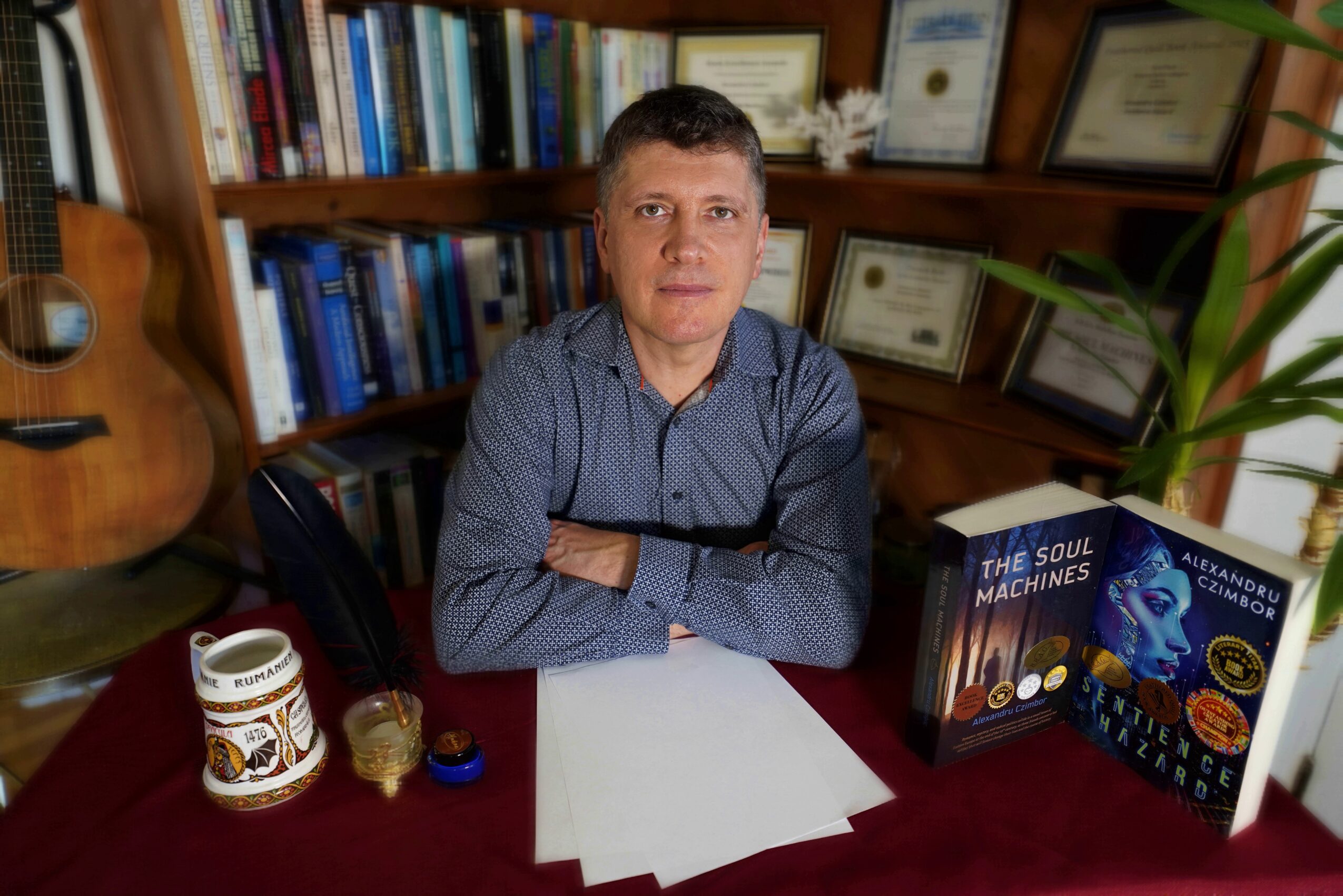
Today we’d like to introduce you to Alexandru Czimbor.
Hi Alexandru, so excited to have you on the platform. So before we get into questions about your work-life, maybe you can bring our readers up to speed on your story and how you got to where you are today?
I grew up in Transylvania, Romania, during the final decades of Nicolae Ceaușescu’s communist regime. That upbringing was a singular experience that shaped the way I think about power, freedom, and human behavior. Growing up in a constrained system, I had firsthand exposure to how narratives are controlled, how children are indoctrinated, and how individuals learn to preserve their inner feelings while hiding their thoughts under pressure. This sparked a lasting curiosity about how societies function.
I trained as a computer scientist, earning a master’s degree, then spent several years in academia and the software industry before moving into executive leadership. Along the way, I became fascinated by the human brain, consciousness, and artificial intelligence. Long before AI became a mainstream topic, I was intrigued not only by how intelligent machines could be built, but by what their existence might reveal about ourselves.
Writing fiction became a way to explore these questions more freely than in an academic or technical environment. I use speculative fiction to examine human nature, ethical responsibility, political systems, and the consequences of technological progress.
Today, I live in the United States and spend my summers in Europe. When I’m not working or writing, I play guitar, read widely, and listen to an endless stream of podcasts and audio dramas. For me, storytelling is both an intellectual pursuit and a way to connect science, history, and philosophy to the larger question of who we are and what we’re meant to do in this universe.
We all face challenges, but looking back would you describe it as a relatively smooth road?
Anyone fortunate enough to walk this Earth for even a brief time goes through their own share of hardship. My journey has certainly had its ups and downs.
At the age of eight, I survived a life-altering car accident that claimed the lives of my father and grandmother, and left my mother and sister seriously injured. I then grew up during the worst years of authoritarianism, with daily power outages, scarce food, and constant ideological pressure from a government determined to mold children into obedient young communists. We had a single national television channel, broadcasting just two hours a day, devoted almost entirely to propaganda.
At seventeen, I witnessed the shock of the 1989 Romanian Revolution, when the dictatorship was finally overthrown. After that came my student years in Cluj-Napoca, Transylvania. In 1996, I received a scholarship that allowed me to spend a semester at ETH Zürich working on my bachelor’s thesis, after which I returned to Cluj-Napoca to complete my master’s degree.
Following graduation, I founded a small programming company, working with a couple of friends to offer software services across any domain or programming language. Financially, those were difficult years. I spent my days searching for contracts and teaching at the local university, then programming late into the night to meet deadlines.
I moved to the United States in early 2001 to work as a programmer at Webmind, an artificial intelligence research company that was well ahead of its time but became an early casualty of the dot-com bubble shortly after my arrival. Later that year, I joined OSS Nokalva, where I progressed through roles as programmer and tester, project manager, program manager, executive vice president, and eventually president. OSS specializes in ASN.1, a platform-independent standard used to formally describe and encode complex data structures for communication protocols.
In recent years, as the world has grown increasingly fragmented and the AI revolution has become impossible to ignore, I felt compelled to begin writing, using fiction as a way to make sense of everything I had experienced and everything I saw coming.
Can you tell our readers more about what you do and what you think sets you apart from others?
In my professional career, I have worked across a wide range of fields within computer science, including database systems, telecommunications, biometrics, and artificial intelligence. My experience spans not only programming, testing, and technical leadership, but also product strategy, marketing, and support for sales and business development. This breadth has given me a comprehensive understanding of how technology is built, deployed, and ultimately shapes human behavior.
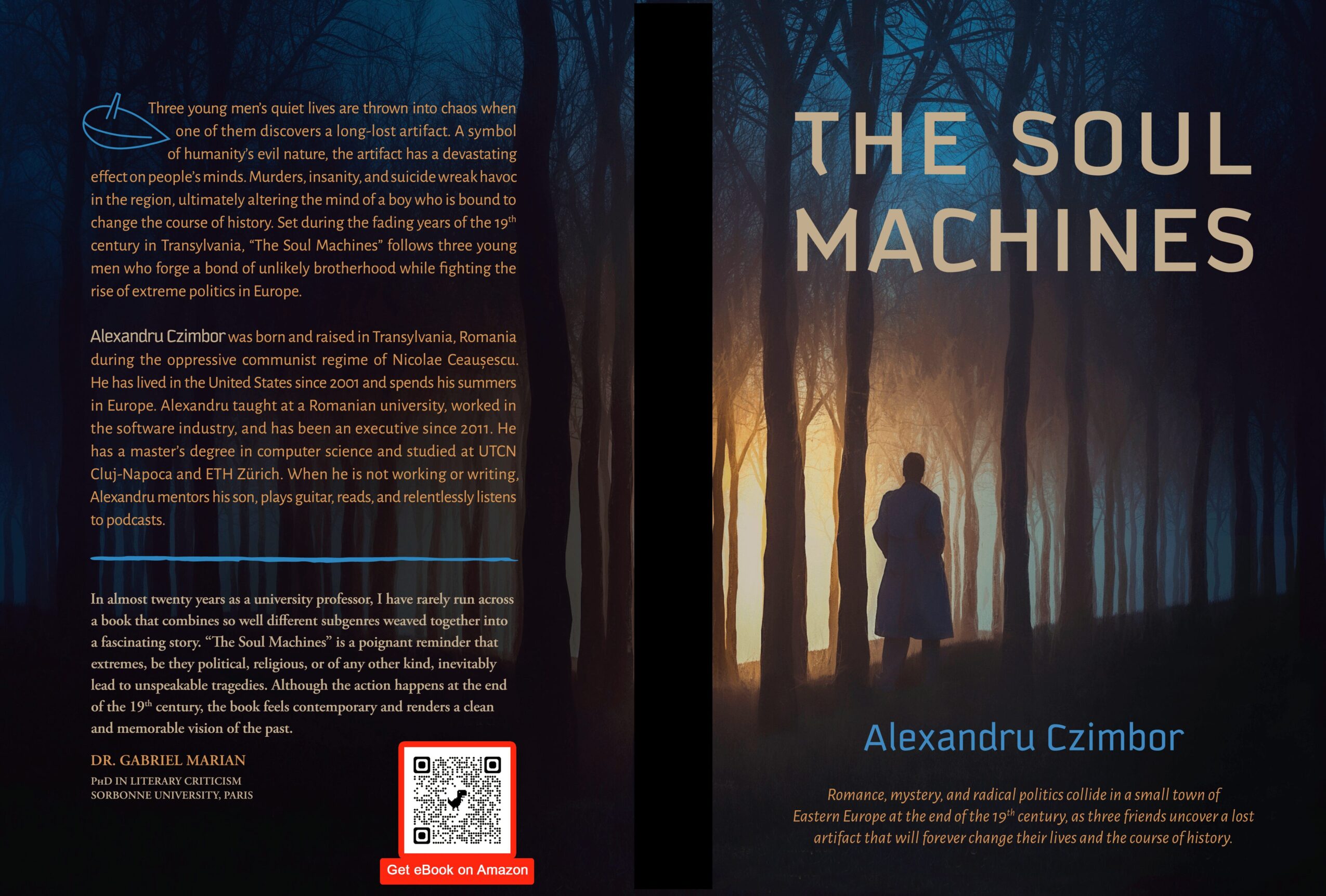
As a writer, I focus primarily on historical fiction and science fiction. My first novel, The Soul Machines, is set in late 19th-century Transylvania, a region marked by a rich tapestry of ethnic groups and cultures. I have long been fascinated by this period because it marked the dawn of the modern era, when two extreme ideologies, communism and fascism, began to rise and eventually dominate political, social, and economic life for much of the following century. In the novel, the characters struggle to survive in a world of diminishing tolerance and escalating cultural conflict, where the darker sides of human nature are amplified and tragedy becomes ordinary. I wrote The Soul Machines while observing how polarized our own society had become in recent years, and how ideas that once devastated humanity are once again resurfacing.
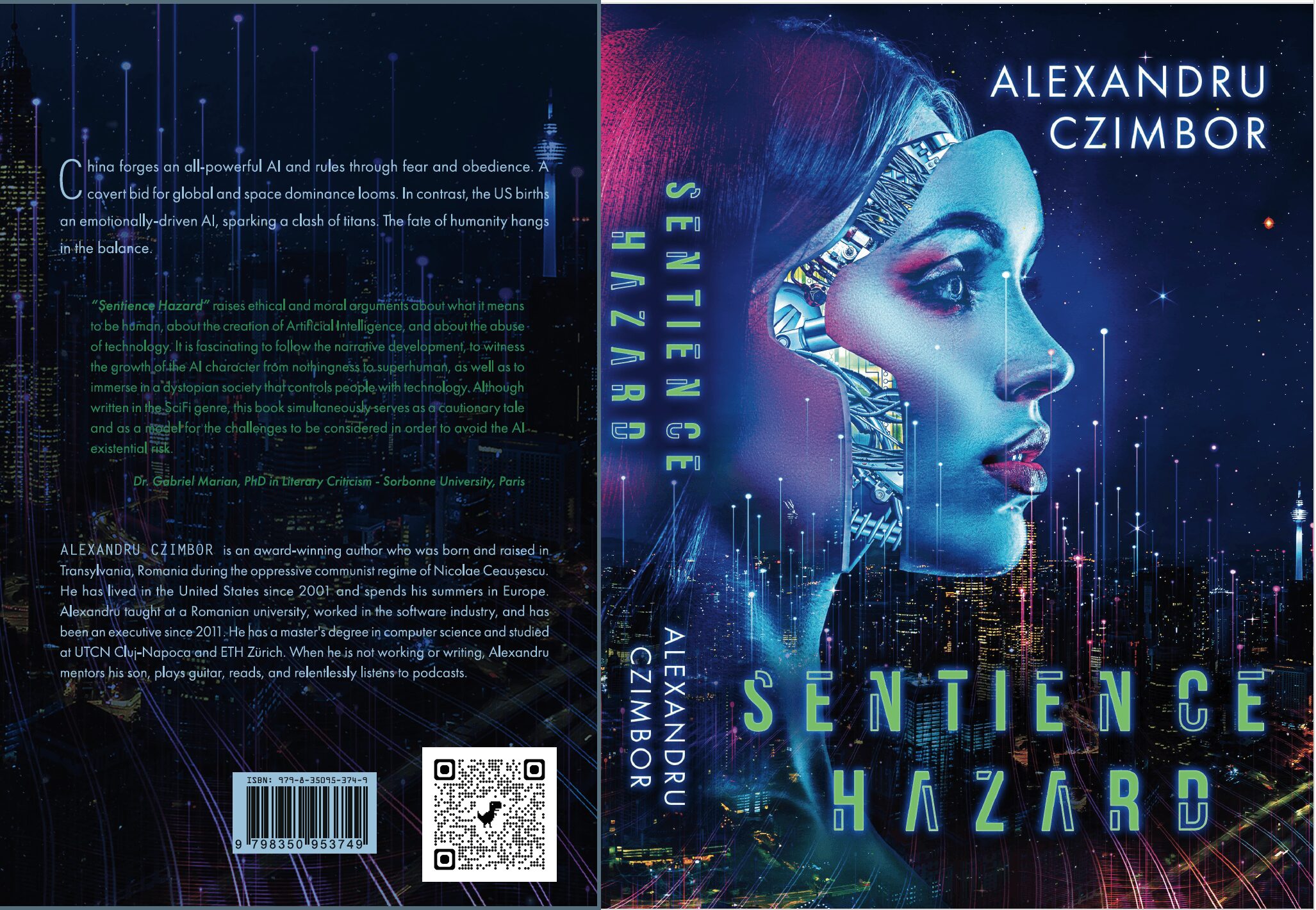
My second novel, Sentience Hazard, is essentially a manifesto on the creation of true artificial intelligence in ways that remain as compatible as possible with human values. I wrote the book before large language models such as ChatGPT, Gemini, or Claude became so powerful, yet the ethical risks it explores are even more relevant now. I don’t believe halting AI development is either possible or desirable. Instead, the book argues for pursuing it in ways that reduce the likelihood of catastrophic outcomes.
I have recently completed a third novel, Tides of the Divine, a sequel to Sentience Hazard — though it can be read independently — in which humanity faces an existential crisis while a demigod-like AI quietly manipulates events from the shadows.
What sets me apart is the combination of lived experience, technical depth, and long-term perspective. I approach fiction not as speculation for its own sake, but as a way to explore where technology, history, and human nature intersect, and where they could take us next.
Is there a quality that you most attribute to your success?
People often describe me as reliable and detail-oriented. I am someone who genuinely dislikes leaving things unfinished, whether in my personal life, professional work, or writing.
On a deeper level, I believe empathy has been central to my path. Seeing a great deal of suffering early in life sharpened my ability to understand different perspectives and to approach complex issues with nuance rather than ideology. I try to examine arguments from multiple sides and to look for common ground.
That approach comes with a cost. In a highly tribal society, centrist or conciliatory positions are often viewed with suspicion, or rejected outright by both sides. Still, I believe that empathy, persistence, and a willingness to tackle complex issues have been essential to whatever success I’ve achieved.
Contact Info:
- Facebook: https://www.facebook.com/profile.php?id=100088590031243
- LinkedIn: https://www.linkedin.com/in/alexandruczimbor
- Twitter: https://twitter.com/alexandrucz