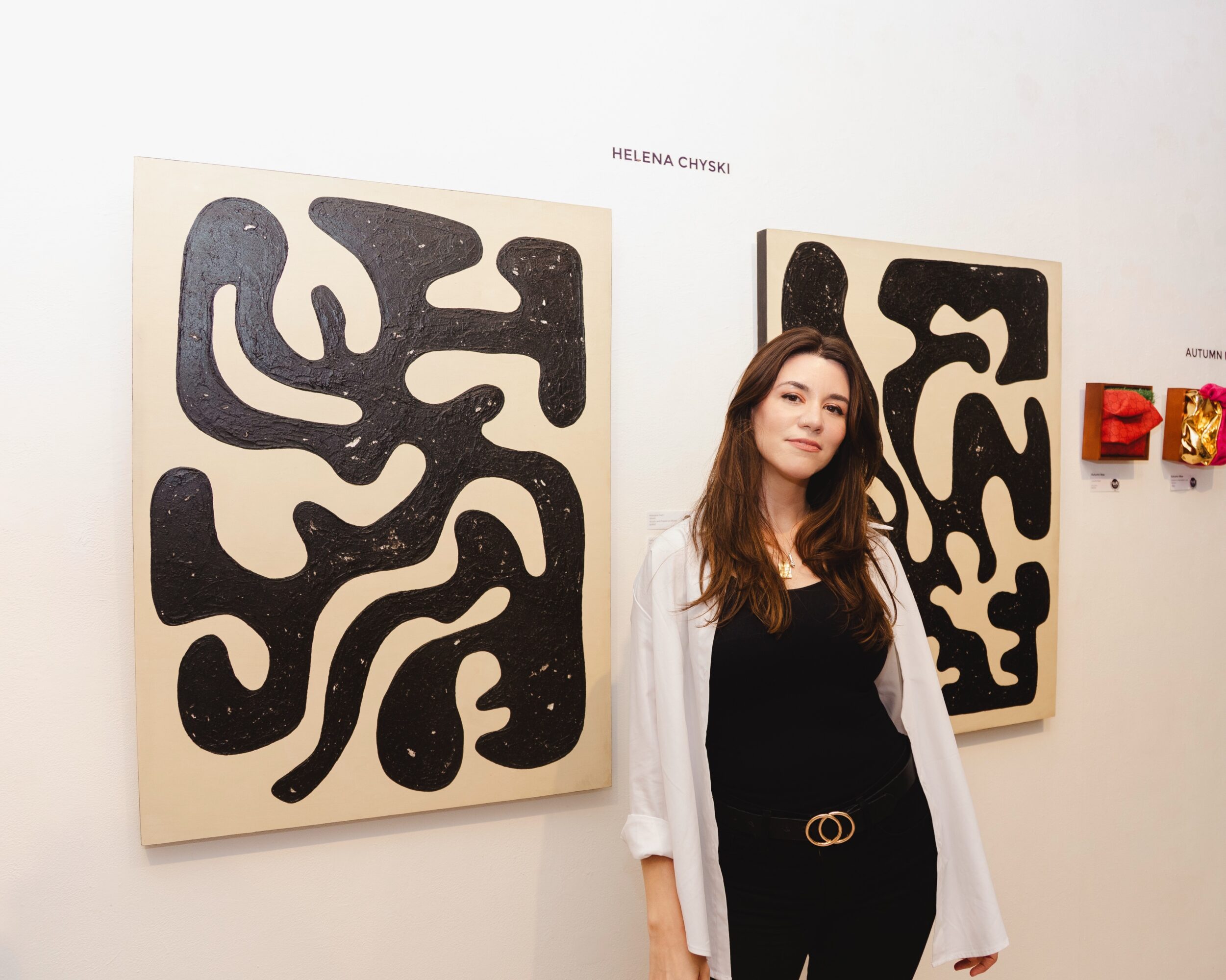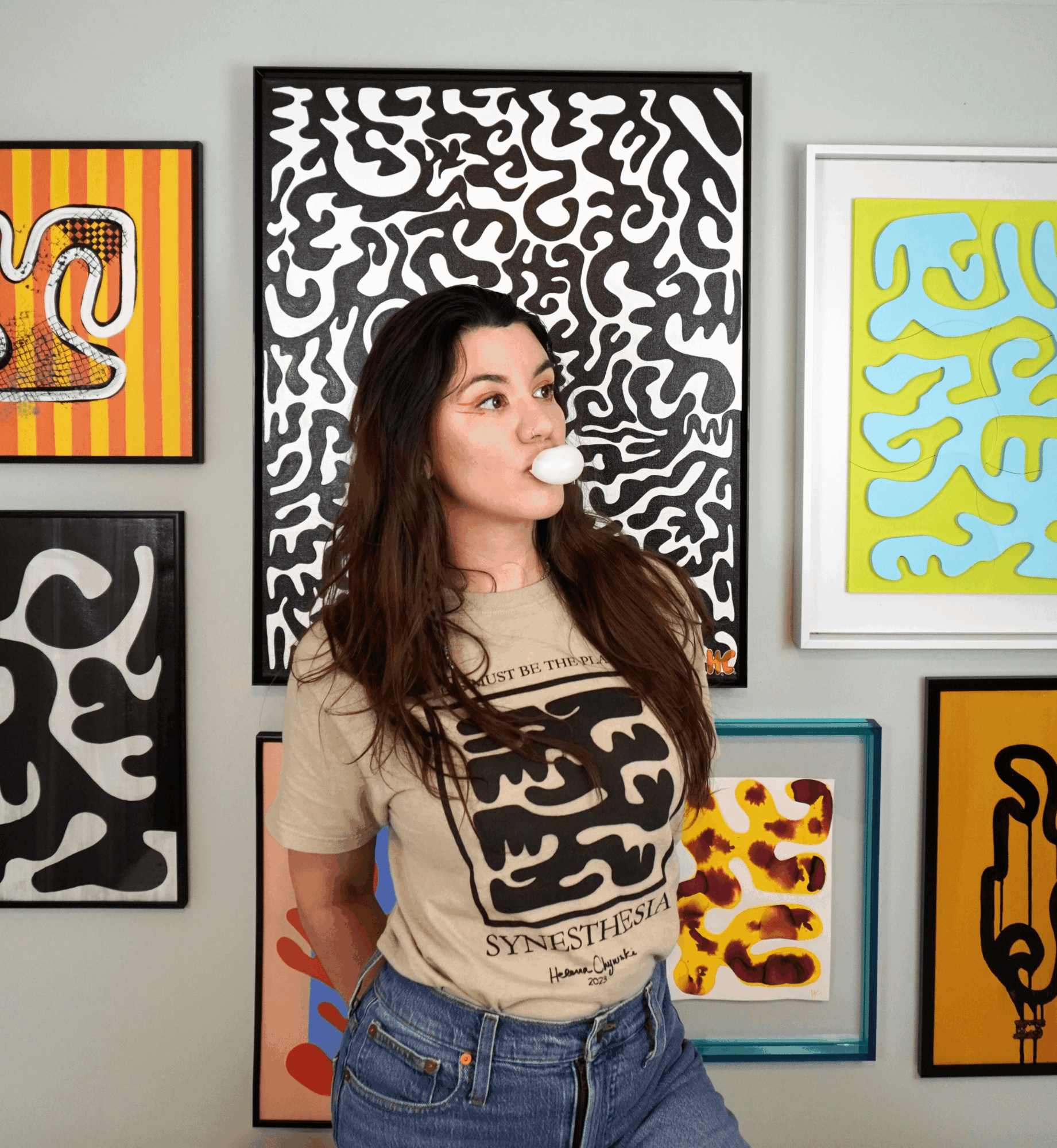





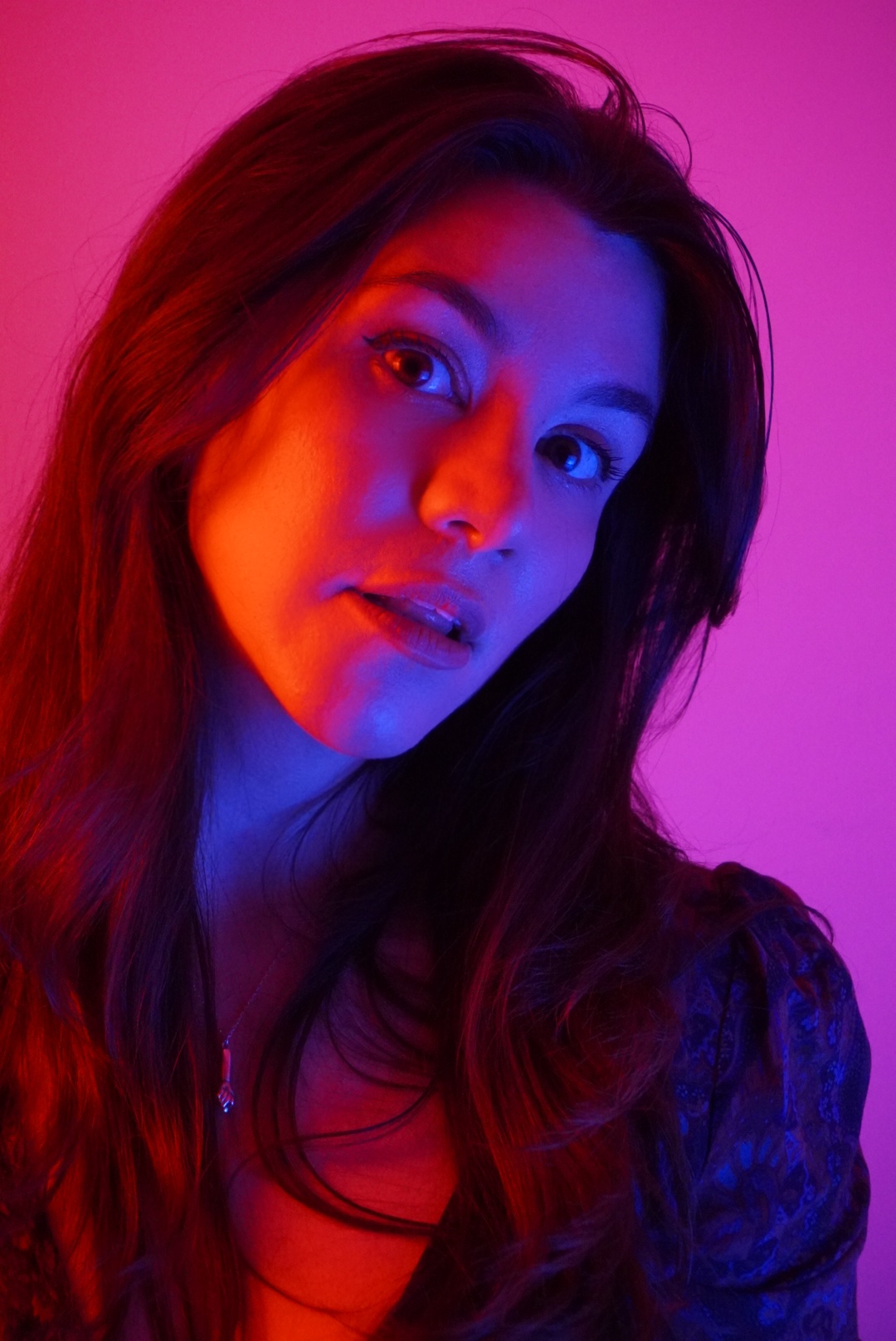
Today we’d like to introduce you to Helena Chywski.
Hi Helena, can you start by introducing yourself? We’d love to learn more about how you got to where you are today?
My path to becoming an artist wasn’t exactly traditional. I’ve always been creative, but for many years, art existed alongside a completely different career. I studied business management and have spent more than a decade working in the corporate world while creating whenever I could.
My connection to art began much earlier, though. My father was an architect, engineer, and artist, and some of my earliest memories are of watching him create. He passed away when I was nine, but art remained one of the ways I continued to feel connected to him. Music also became deeply important to me. One of my strongest childhood memories is listening to *Swan Lake* with my father, and that relationship between sound, memory, and emotion has stayed with me ever since.
I experience chromesthesia, a form of synesthesia in which sound creates visual experiences. When I listen to music, I see colors, shapes, textures, and movement, and I may also physically feel aspects of the sound. In 2021, I began intentionally translating those experiences into artwork. What started as a personal exploration gradually became the foundation of my entire practice.
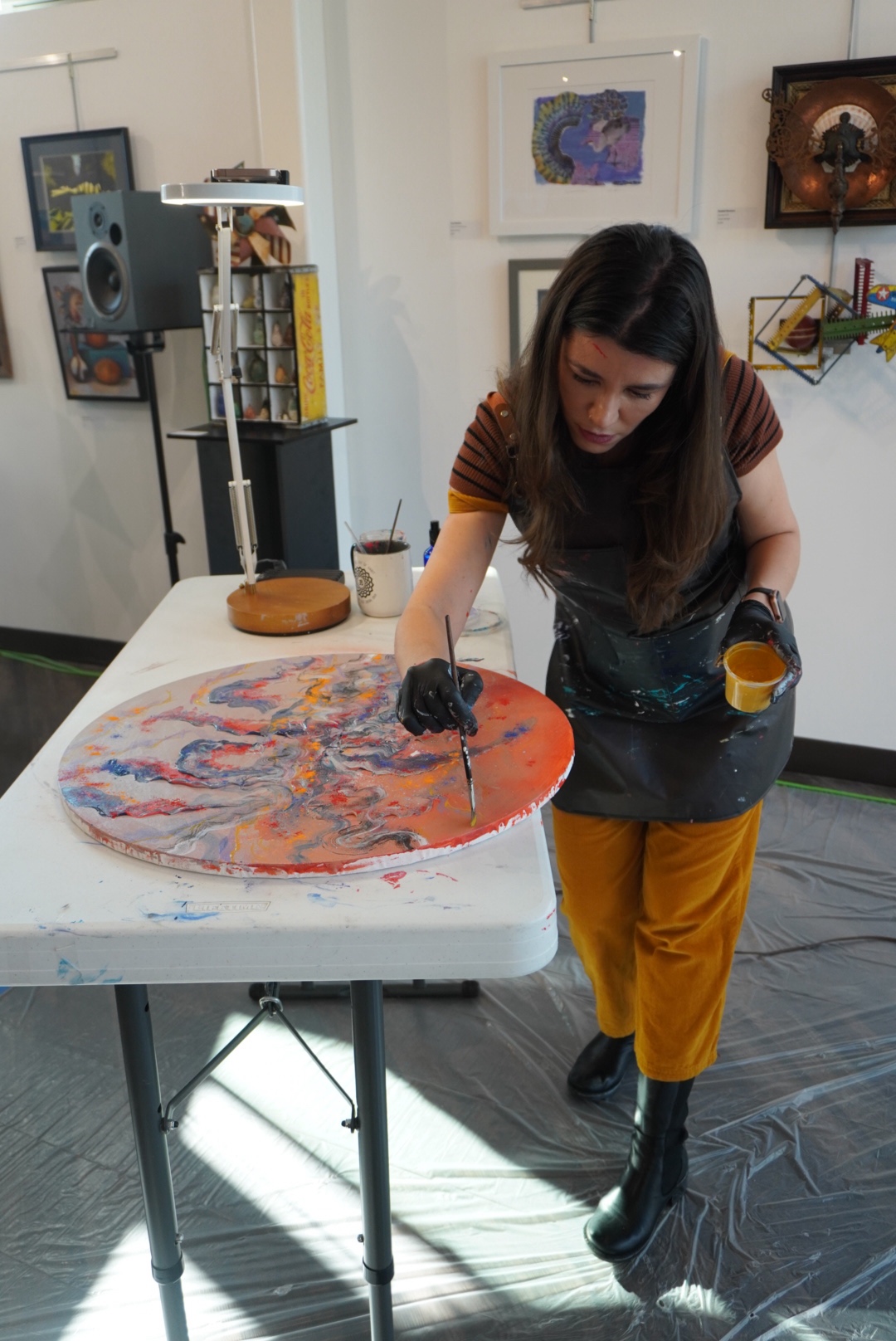
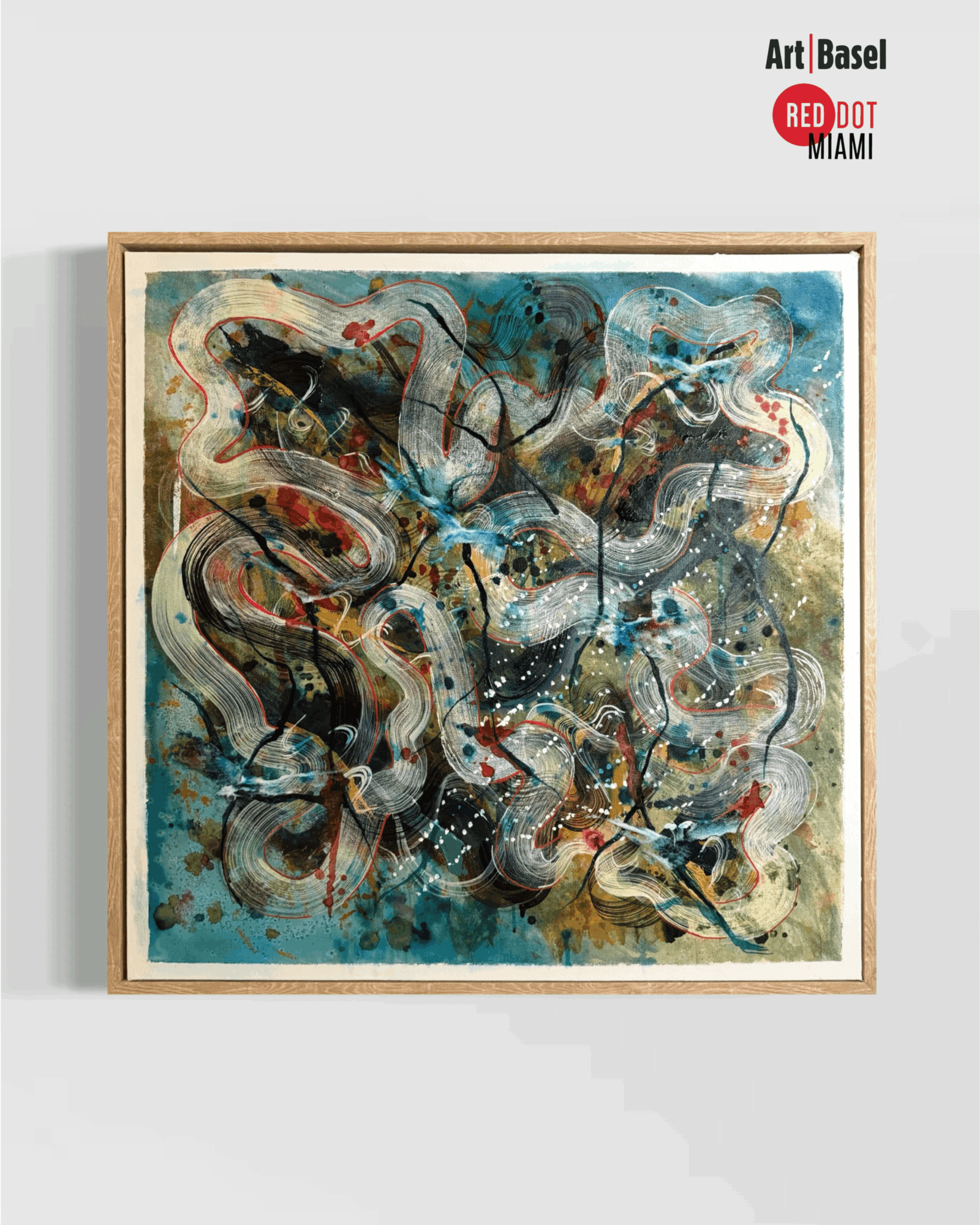
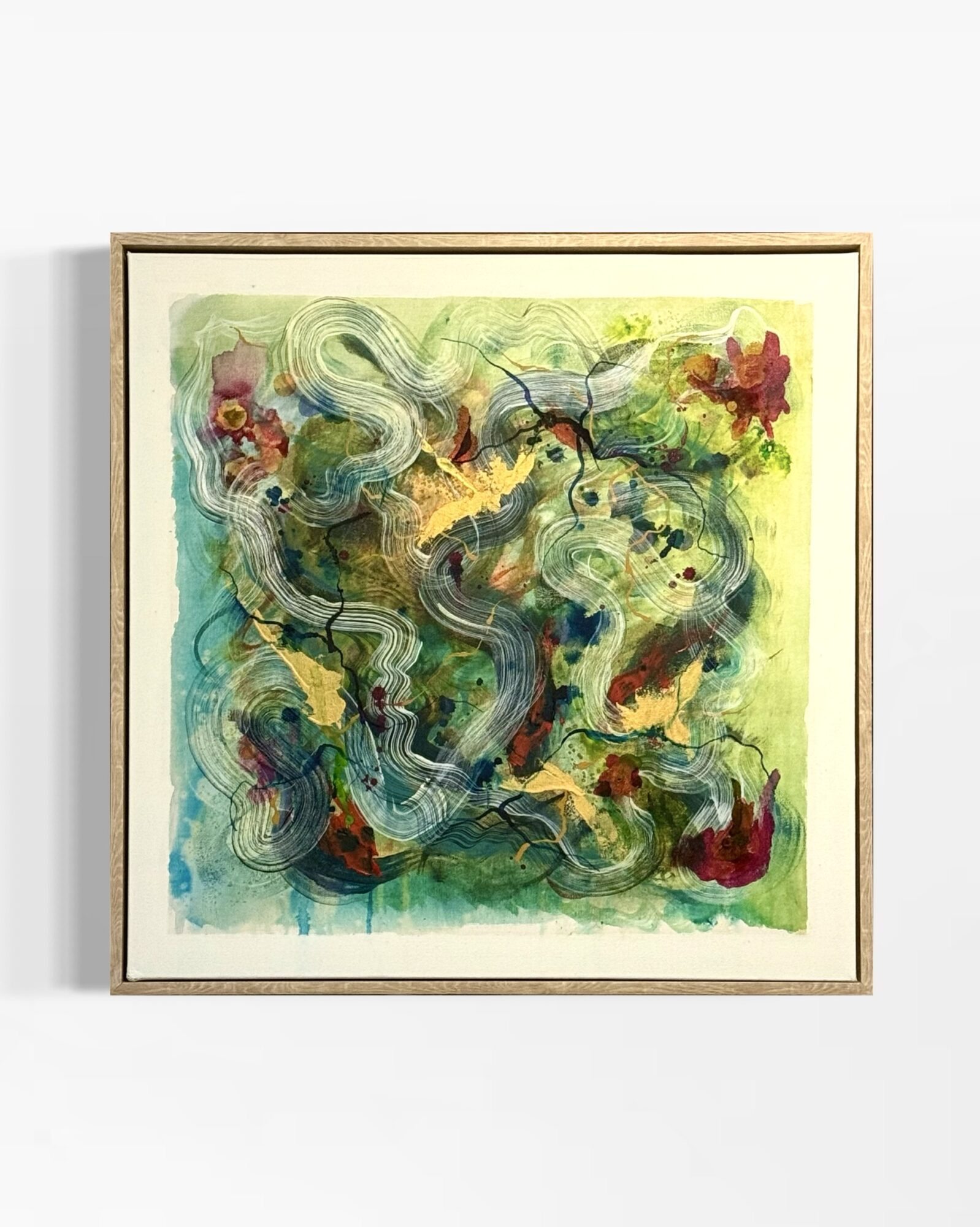
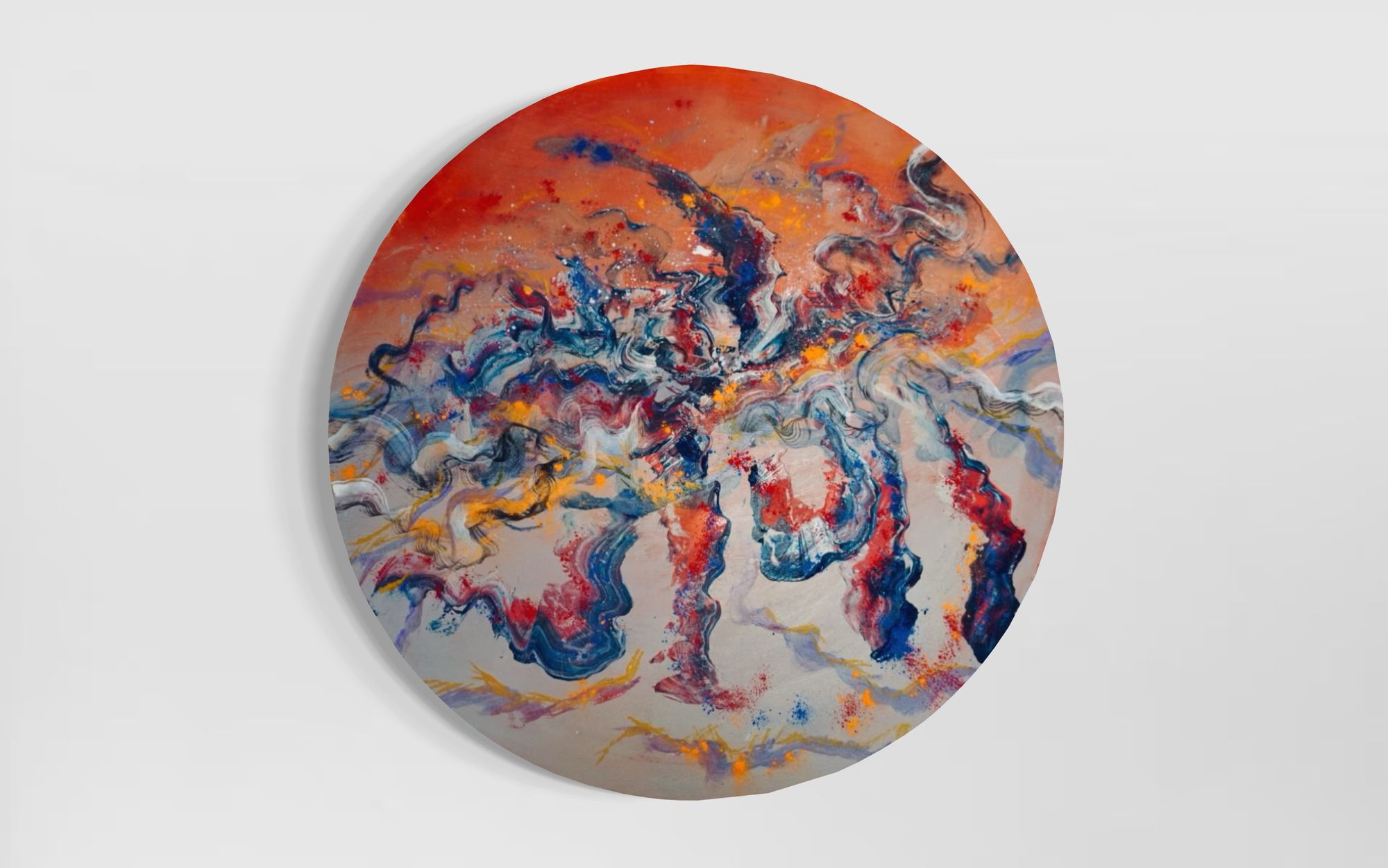
My process usually begins with listening—often to the same piece of music over and over. I move with it, study its layers, and allow myself to become completely immersed in the sound before deciding how to translate what I experience. I work across painting, mixed media, digital processes, and dimensional elements because every song seems to ask for something different.
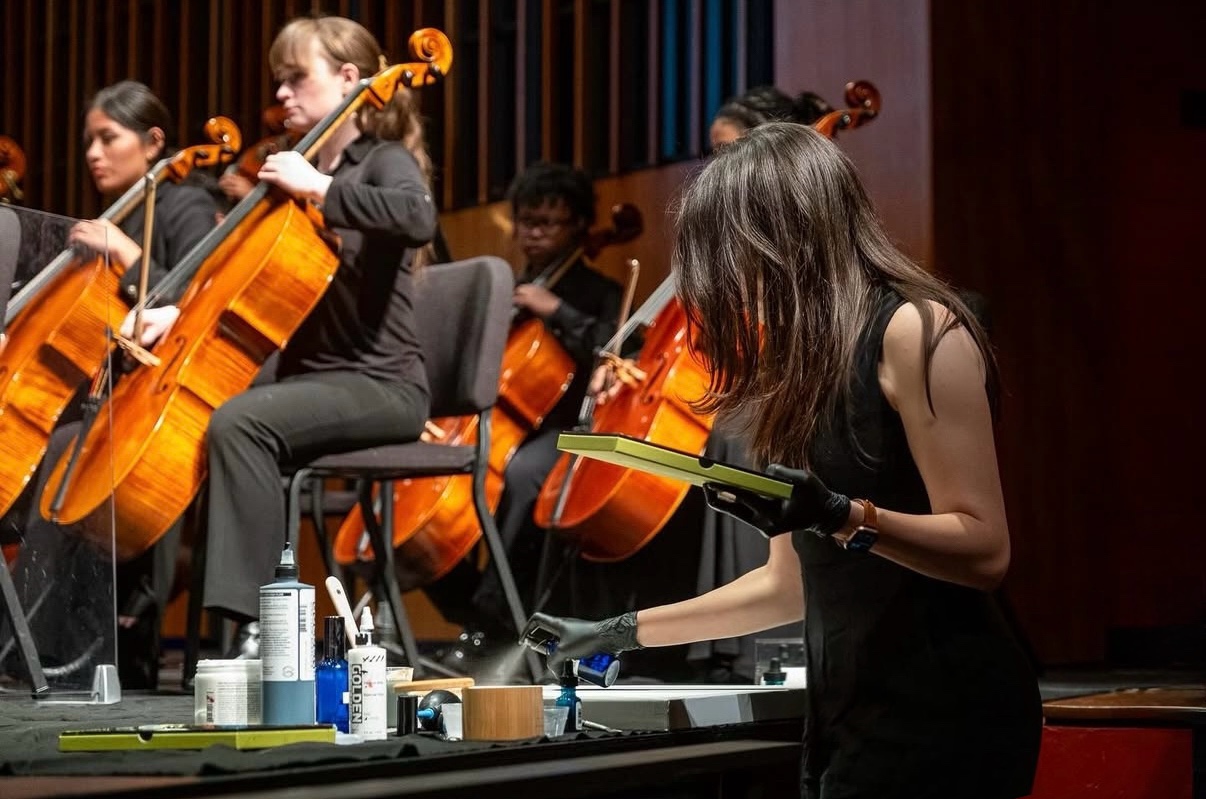
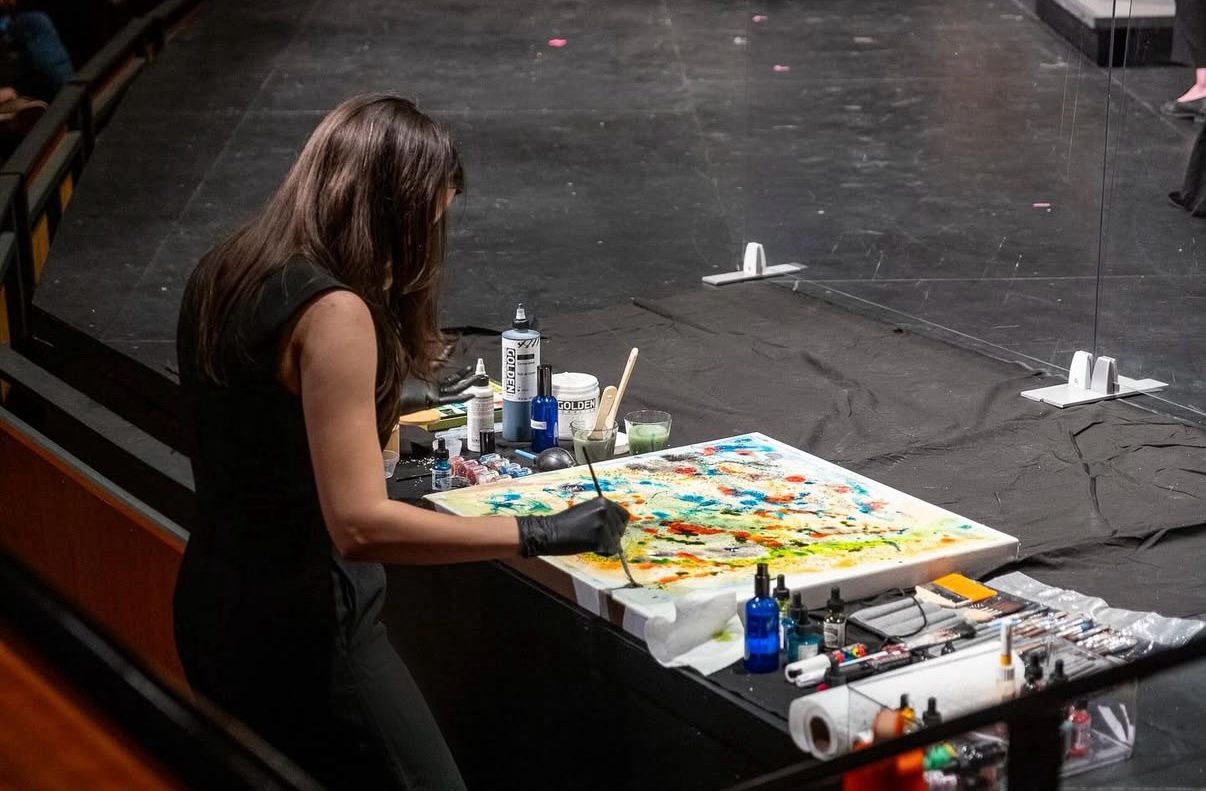
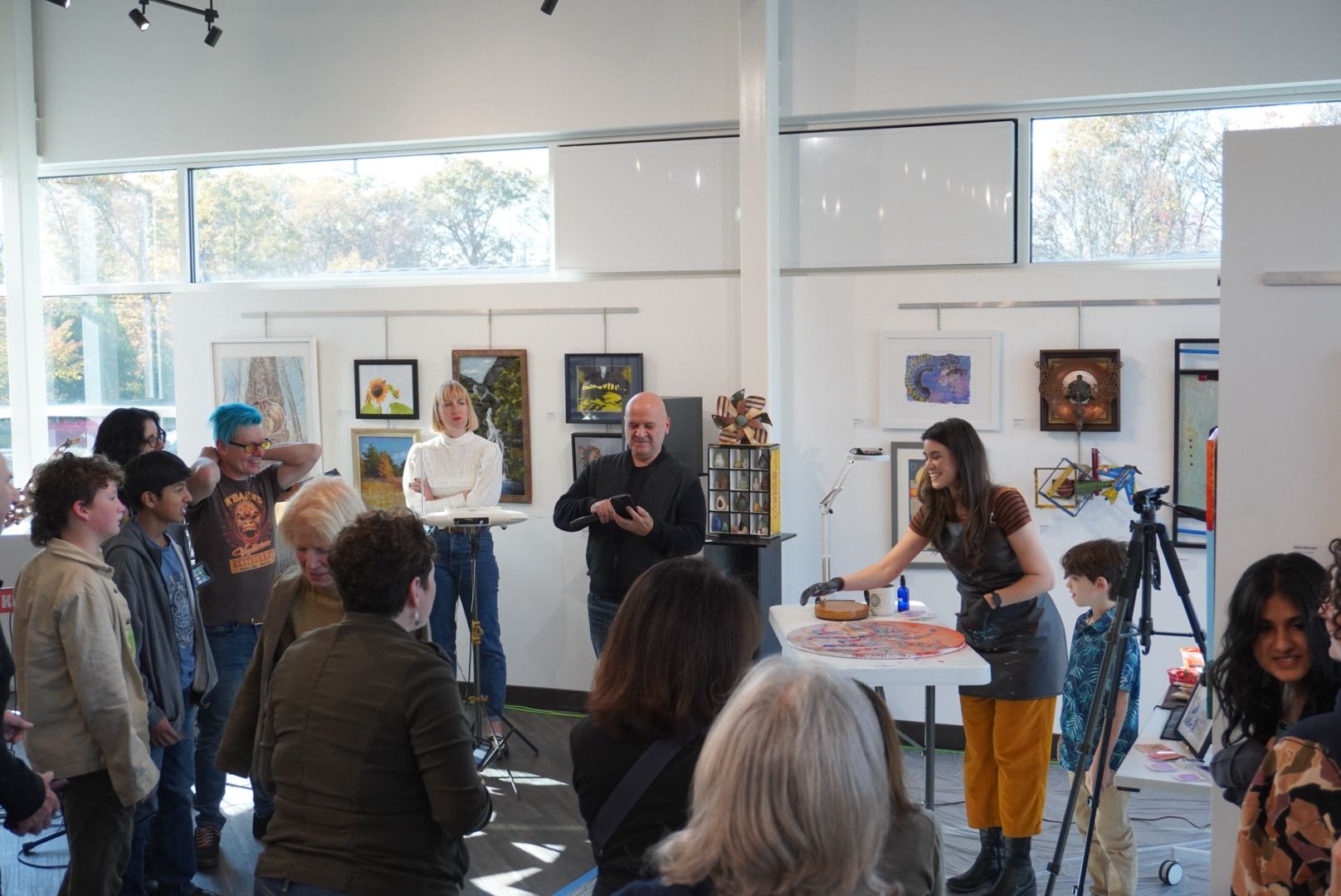
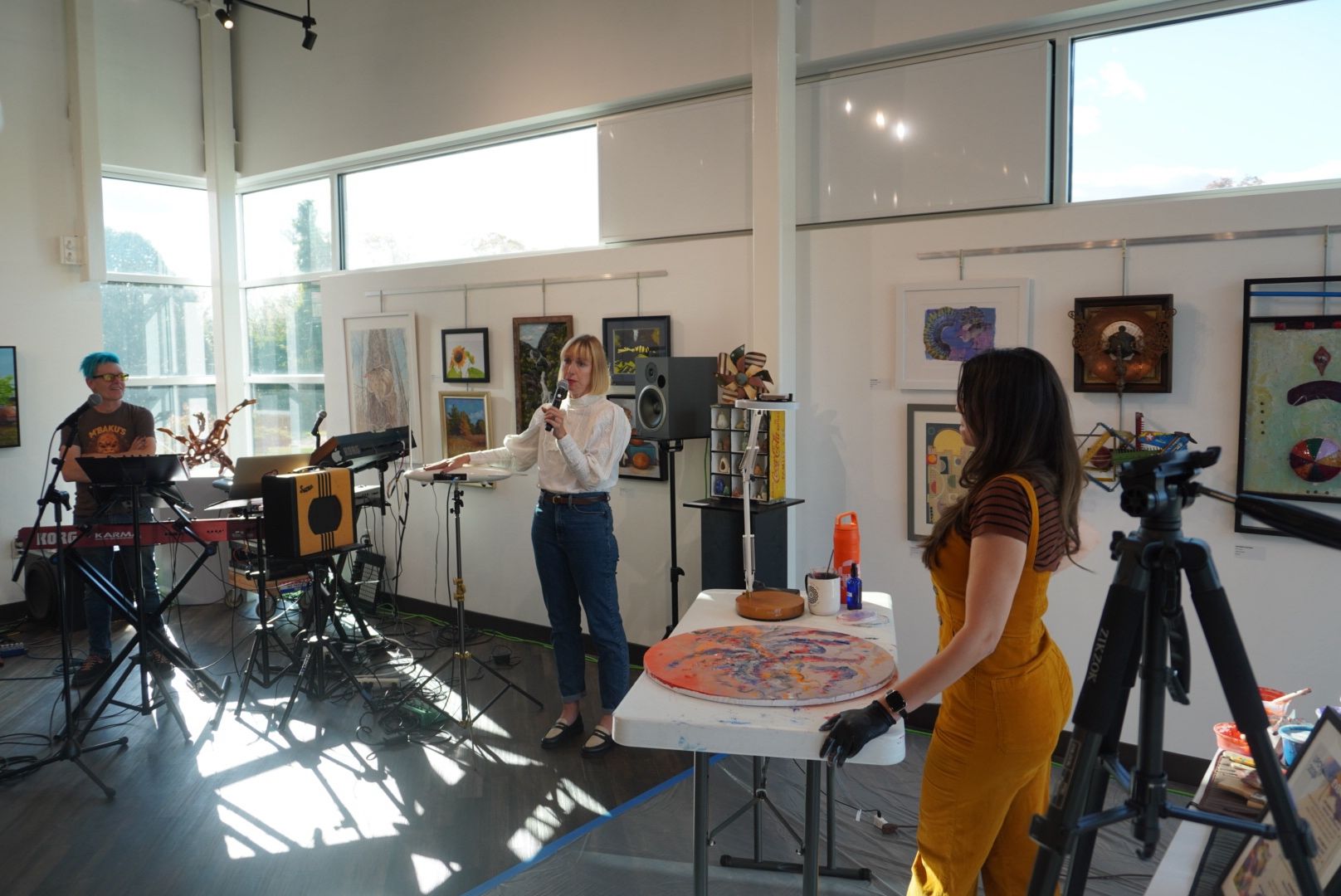
Since then, my work has taken me into galleries and art fairs, as well as live-painting performances alongside musicians and orchestras. One of the most meaningful moments in my journey was creating a live interpretation of Mussorgsky’s *Pictures at an Exhibition* with the Montclair State University Symphony Orchestra. That piece is now permanently displayed at the university.
I’m still balancing my creative practice with my corporate career and raising two young children, so the journey hasn’t always been linear or fast. But I think that has made the work more intentional. Today, I’m continuing to explore how sound can become something visual, physical, and shared. Ultimately, I hope my work creates curiosity and connection while offering people a glimpse into a way of experiencing the world that may be very different from their own.
We all face challenges, but looking back would you describe it as a relatively smooth road?
It definitely hasn’t been a completely smooth road. One of my biggest challenges has been finding the time and confidence to take my art seriously while balancing a full-time corporate career and raising two young children. I don’t have a traditional fine arts background, so for a long time, I questioned whether I truly belonged in the art world. I’ve had to learn a great deal on my own—not only about materials and techniques, but also about the business side of being an artist.
Creating work based on synesthesia comes with its own challenges as well. I’m translating something deeply personal and internal into a visual language that other people can connect with. There isn’t a formula for that, and because every sound creates a completely different experience, I often have to experiment until I find the materials and process that feel right.
I’ve also struggled with the pressure to remain constantly visible, especially on social media. At one point, I became so overwhelmed by the expectation to continually create, share, and promote my work that I stepped away from my art account for nearly a year. I needed to be present with my family and reconnect with why I create in the first place. That break taught me that progress doesn’t always have to be public, and that rest can be part of the creative process too.
There have been plenty of moments of self-doubt, rejection, and uncertainty, but each one has pushed me to trust my own perspective more. My path may be unconventional and sometimes slower than I would like, but it is mine—and I’ve learned that building something meaningful doesn’t have to happen all at once.
As you know, we’re big fans of you and your work. For our readers who might not be as familiar what can you tell them about what you do?
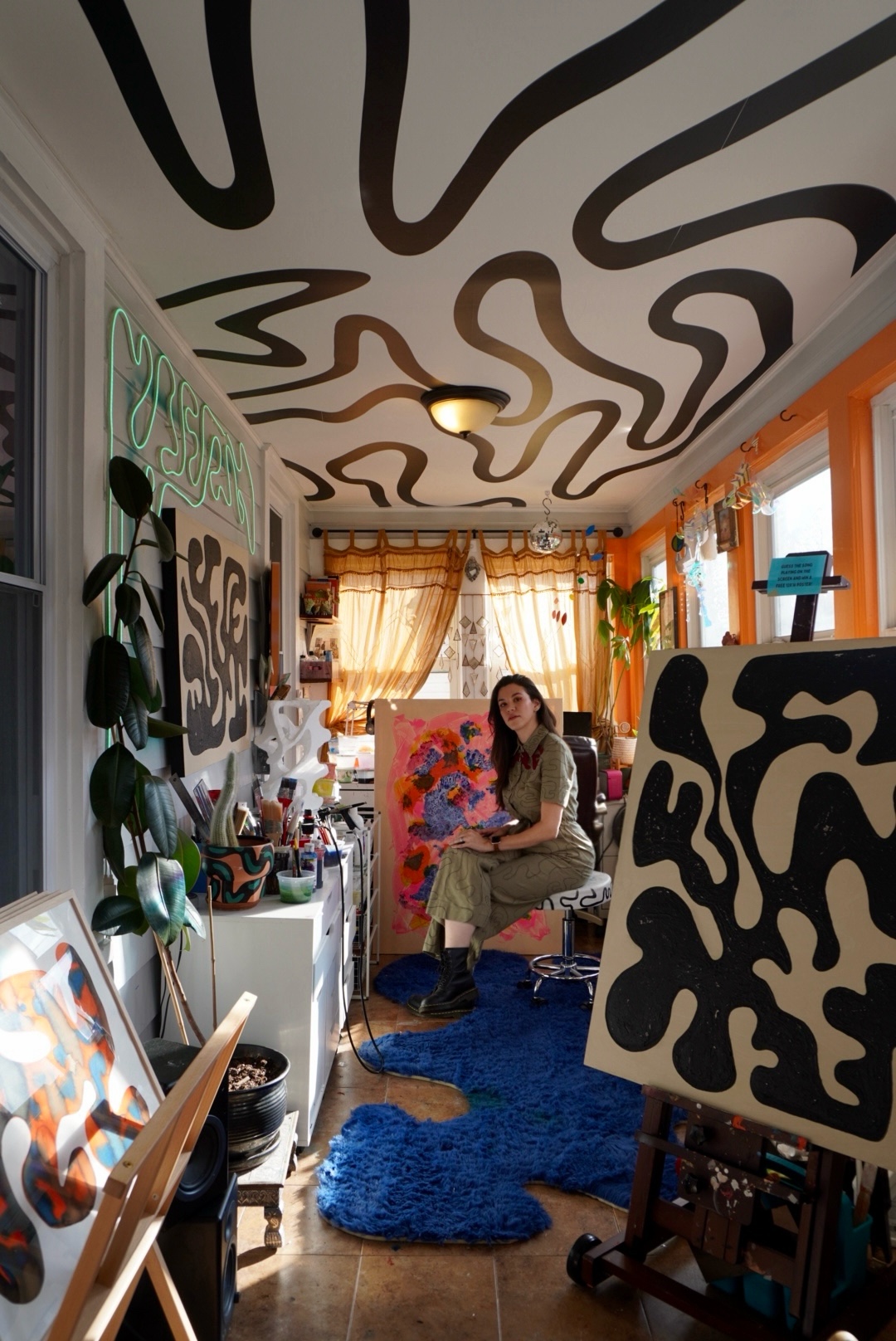
I create visual interpretations of music and sound through my experience of synesthesia. I specialize in translating what I see and physically feel while listening—colors, shapes, textures, movement, rhythm, and layers—into mixed-media artwork. My practice includes painting, digital processes, dimensional elements, 3D-printed forms, light, and unconventional materials. I don’t limit myself to one medium because every sound feels different and often calls for its own visual language.
I’m perhaps best known for my interpretations of music and for creating artwork live alongside musicians and orchestras. During a live performance, the audience is able to watch the visual piece develop while hearing the music that inspired it. I love those moments because the painting becomes part of the performance, creating a conversation between sound, movement, and visual art.
What sets my work apart is that I’m not simply illustrating a song or painting the mood it creates. I’m translating a real sensory response. Certain instruments may have specific colors, shapes, positions, or textures, and those elements can shift as the music changes. My process is also very physical. I listen repeatedly, move with the music, and allow myself to become completely immersed in it before and during the creation of a piece. The finished work becomes both an artwork and a kind of record of how that sound exists inside my mind and body.
I’m most proud of the fact that I’ve built this practice from something that once felt extremely personal and difficult to explain. Seeing people connect with the work, even if they don’t experience synesthesia themselves, has been incredibly meaningful. I’m especially proud when someone tells me that a piece made them listen to a familiar song differently. That is ultimately what I hope the work does: invites people to slow down, become curious, and consider how differently each of us may experience the exact same world.
Who else deserves credit in your story?
I’ve been incredibly fortunate to have people around me who believe in my work, sometimes even during the moments when I’m questioning myself.
My husband, Brett, has been one of my greatest supporters. Building an artistic career while working full-time and raising two children requires a great deal of patience, flexibility, and teamwork, and I couldn’t do it without him. My children, Miles and Isabel, also influence me in ways they may not fully understand yet. They remind me to remain curious, playful, and open to experiencing the world without overthinking it.
My father also deserves credit, even though he passed away when I was young. He was an architect, engineer and artist, and my memories of watching him create and listening to music with him are deeply woven into who I am as an artist today. In many ways, the work allows me to continue a creative connection that began with him.
I’m also deeply grateful to the musicians, curators, gallery owners, fellow artists, collectors, and friends who have trusted my ideas and invited me into spaces where the work could grow. The people who have asked me to paint live, included my work in exhibitions and art fairs, purchased or commissioned pieces, shared my work, or simply told someone else about what I do have all played a meaningful role. Every introduction and opportunity has helped me become more confident in claiming this path for myself.
I haven’t had one traditional mentor guiding my career from the beginning. Instead, I’ve had a community of cheerleaders, collaborators, and advocates who have helped in different ways along the journey. I’m genuinely grateful for every person who has seen something in the work and encouraged me to keep going.
Pricing:
- Original synesthesia-inspired artwork is available at a range of price points, depending on size, materials, and complexity.
- Custom commissions begin at $450.
- Commission pricing is determined by the artwork’s size, concept, materials, and level of dimensional detail.
- Commission inquiries can be submitted through helenachywski.com
Contact Info:
- Website: https://helenachywski.com
- Instagram: @helenachywskiartstudio