





Today we’d like to introduce you to Alex Cheparev.
Hi Alex, thanks for joining us today. We’d love for you to start by introducing yourself.
ThemeTown started with my wife Tara and me sitting at the kitchen table, house hunting, and drowning in browser tabs. We had listings open on one site, school ratings on another, flood maps on a third, and a spreadsheet trying to hold it all together. The homes themselves were the easy part. What we really wanted to know was everything around them. Could we walk to a coffee shop? Where were the parks, the bus stops, the grocery stores? How were the schools? Was the house in a flood zone? There was no single place that showed all of that at once.
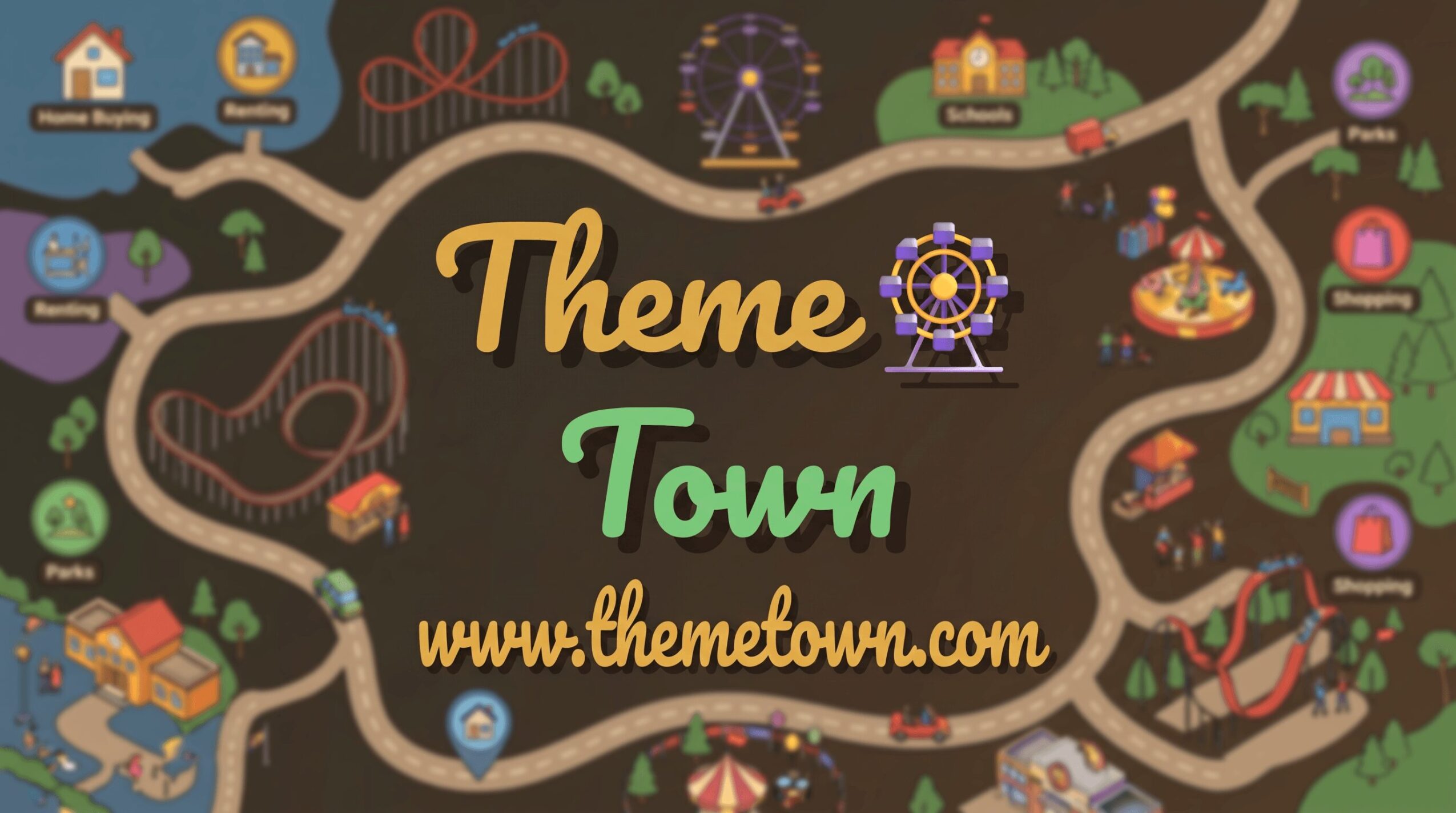
Right around that time we came back from a Disney trip, and I kept thinking about the park maps. A theme park map is a masterpiece of information design. It takes a huge, complicated place and makes it instantly readable. Every ride, restaurant, and restroom is right there, and a five-year-old can navigate it. I remember thinking, why doesn’t house hunting feel like this? Why can’t a neighborhood be presented the way a theme park is, with everything you care about on one friendly map?
Tara made it click. She used to build neighborhood maps for commercial real estate clients, showing businesses everything around a property that mattered to their decision. Companies got that treatment, but regular families buying a home never did. So we decided to build the residential version, and ThemeTown was born. The name is exactly what it sounds like: your town, presented like a theme park map.
I built the first version as an adventure-style map where you pin the homes you’re considering and instantly see what surrounds them. Schools with real ratings, parks, restaurants, supermarkets, hospitals, bus and train routes, walking times, even FEMA flood zones, all in one view instead of fifteen tabs. Pretty quickly I realized buyers were asking an even bigger question: not just “is this the right house?” but “is this the right town?” So ThemeTown grew into a full town research platform. Today it has data-rich reports on more than 20,000 U.S. towns covering schools, crime, property taxes, cost of living, climate, and commutes, side-by-side town comparisons, a Town Match quiz that recommends where to live based on what matters to you, and an AI assistant you can just talk to about where you want to live.
It’s live at themetown.com for both buying and renting, the app is on the App Store for iPhone and iPad with Android on the way, and the core of it is free. I’ve built and run it as a small family company, leaning hard on public data and modern AI tooling to do things that used to take a whole team. But at its heart it’s still the same idea Tara and I had at the kitchen table: house hunting should feel less like a research project and more like planning a trip to a place you’re going to love.
Can you talk to us a bit about the challenges and lessons you’ve learned along the way. Looking back would you say it’s been easy or smooth in retrospect?
Not smooth at all. The honest version is that ThemeTown is almost seven years old as an idea and only recently became real as a product.
Tara and I both come from graphic design backgrounds, so we could always see it. Over the years we designed version after version: different map styles, navigation concepts, icon systems, full UX walkthroughs of how a family would pin homes and explore a neighborhood. The vision was sitting right there in our mockups. What we couldn’t do was build it. We tried to get it made through traditional means more than once, and every attempt fell short. The gap between what we could design and what we could actually ship felt enormous, and there were long stretches where the whole thing just sat in a folder.
What changed is that technology finally caught up to us. Modern AI-assisted development closed the gap between designer and builder, and suddenly the thing we had been sketching for years could actually be constructed, tested, and shipped. Once that door opened I went through it hard. The map app went live, then town reports, comparisons, rentals, the mobile apps, one piece after another. Years of stored-up design decisions came pouring out, which is probably why it moved so fast once it finally moved at all.
That didn’t mean the struggles stopped. Running it as a small family company means every problem is mine at seven in the morning. I’ve woken up to a surprise map-data bill that was burning six hundred dollars a day and had to re-architect how the whole site loads places data before it did real damage. Our first App Store submission got rejected and had to be reworked and resubmitted. There is always some data source going down, some edge case in some town’s records, some hat I’ve never worn before that suddenly needs wearing.
But if there’s a lesson in our road, it’s that falling short for years doesn’t mean the idea is wrong. Sometimes the idea is just early. The seven years we spent unable to build ThemeTown were also seven years of refining exactly what it should be, so when the tools finally arrived, we knew precisely what to make.
As you know, we’re big fans of you and your work. For our readers who might not be as familiar what can you tell them about what you do?
I wear a few hats. I’m the founder of ThemeTown, I’ve spent more than twenty years as a visual effects supervisor and creative director in New York, and I’ve taught VFX and animation at the School of Visual Arts since 2006. It sounds scattered, but there’s one thread through all of it: I take complicated things and make them clear, readable, and beautiful.
I got my start early. At seventeen, while at LaGuardia High School of Music & Art and Performing Arts, the “Fame” school, I was building some of the first websites for major design brands through a work-study program, along with print and packaging work. I went on to study computer art at SVA, then spent the next two decades in visual effects, working my way up from 3D artist to supervisor and creative director.
That’s probably the work people would recognize, even if they never saw my name on it. I’ve supervised visual effects and CG on Super Bowl commercials, global campaigns for some of the world’s biggest brands, digital billboard installations, and film and television projects people know well. My specialty was always the invisible middle of production: taking a director’s idea and figuring out how to actually make it real, on time, with a team of artists.
ThemeTown is where all of that experience finally pointed somewhere personal. After almost seven years of designing a product we couldn’t build, the technology caught up to the vision, and it turned out the skills I use to run productions are exactly what a founder needs: break the vision into pieces, set the quality bar, and ship. I designed and built it end to end, and I run it today alongside my supervising and teaching work.
What am I most proud of? Two things. Twenty years of students at SVA who are now working artists and supervisors all over the industry. And ThemeTown, because it’s the most personal thing I’ve ever made. It started with my wife Tara and me at the kitchen table, and now it helps families all over the country understand the towns they’re considering, with everything that matters to them on one friendly map. As for what sets me apart, I think it’s range. I’ve been the designer, the artist, the supervisor, the teacher, and now the founder. I’ve seen how creative work gets made from every seat in the room, and ThemeTown is where all of it finally comes together.
We all have a different way of looking at and defining success. How do you define success?
My definition has changed over the years. Early in my career, success meant the big credits: the Super Bowl spot, the movie title everyone recognizes, the campaign running in Times Square. Those were thrilling, but they fade fast. There’s always another campaign, and the work, as proud of it as I am, was always in service of someone else’s idea.
Now I define success as closing the gap between what you can imagine and what actually exists in the world. Tara and I carried ThemeTown around as an idea for almost seven years. Turning it into something real that strangers use every day to make one of the biggest decisions of their lives, that feels like success in a way no credit ever did. When someone pins a few homes on the map, discovers the town that actually fits their family, and feels relief instead of overwhelm, that’s the whole point.
And there’s a quieter measure I’ve come to trust: the success of the people you’ve invested in. When a former student sends me a note that they just got their first supervisor title, or when my daughter sees that an idea from our kitchen table became a real thing, that lasts longer than anything with my name on it. Success is building things, and people, that keep going without you.
Pricing:
- ThemeTown is free to use. Anyone can explore the map, pin homes, and read full town reports on more than 20,000 U.S. towns at themetown.com, no account required.
- A free account adds more pinned homes and rentals, saved places, photos, and syncing across your devices, including the iPhone and iPad app.
- Buyer Premium is $4.99/month for serious house hunters who want more pinned homes, more photos, and more saved places.
- Real estate agents and for-sale-by-owner sellers can choose Listing Basic ($19.99/month) or Listing Pro ($49.99/month), which add shareable client reports, and on Pro, your own branding across the maps and reports you share.
- Launch special: everyone who signs up during our launch period gets the premium features included free.
Contact Info:
- Website: https://www.themetown.com
- Instagram: https://www.instagram.com/themetownmaps
- Facebook: https://www.facebook.com/themetownmaps
- LinkedIn: https://www.linkedin.com/company/themetown
- Twitter: https://x.com/themetownmaps
- Youtube: https://www.youtube.com/@themetownmaps
- Other: https://apps.apple.com/app/themetown-town-research/id6778204039