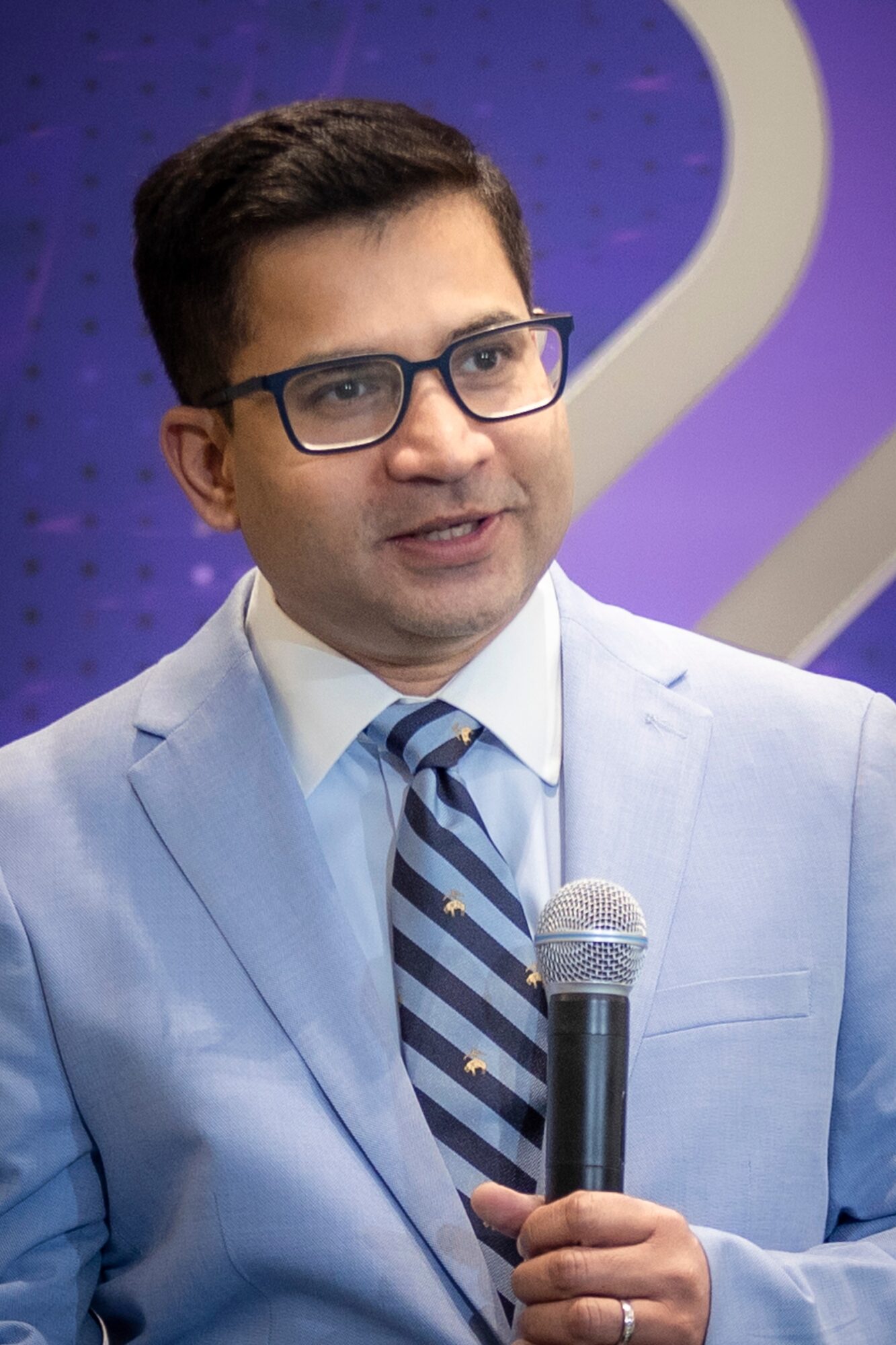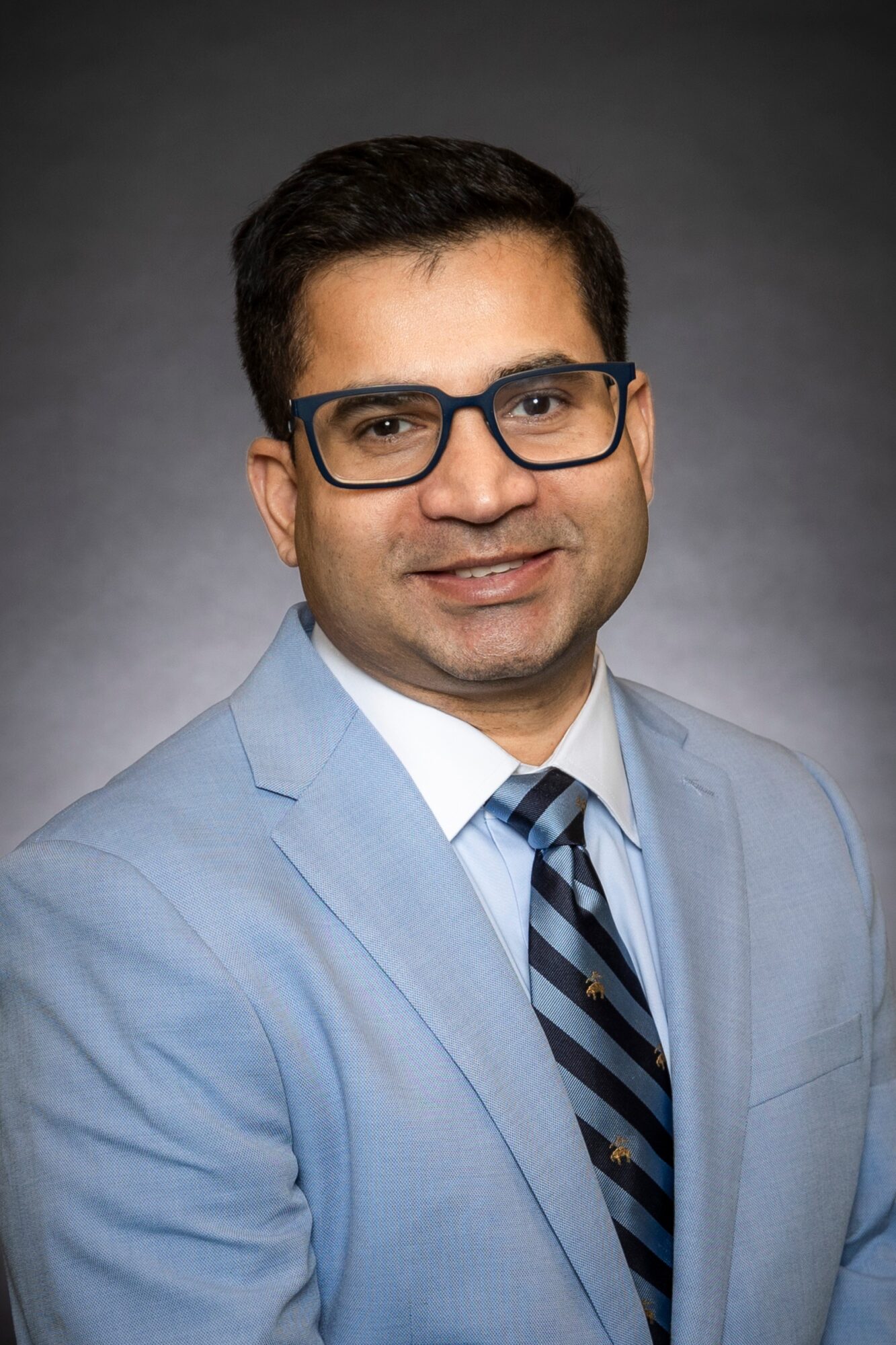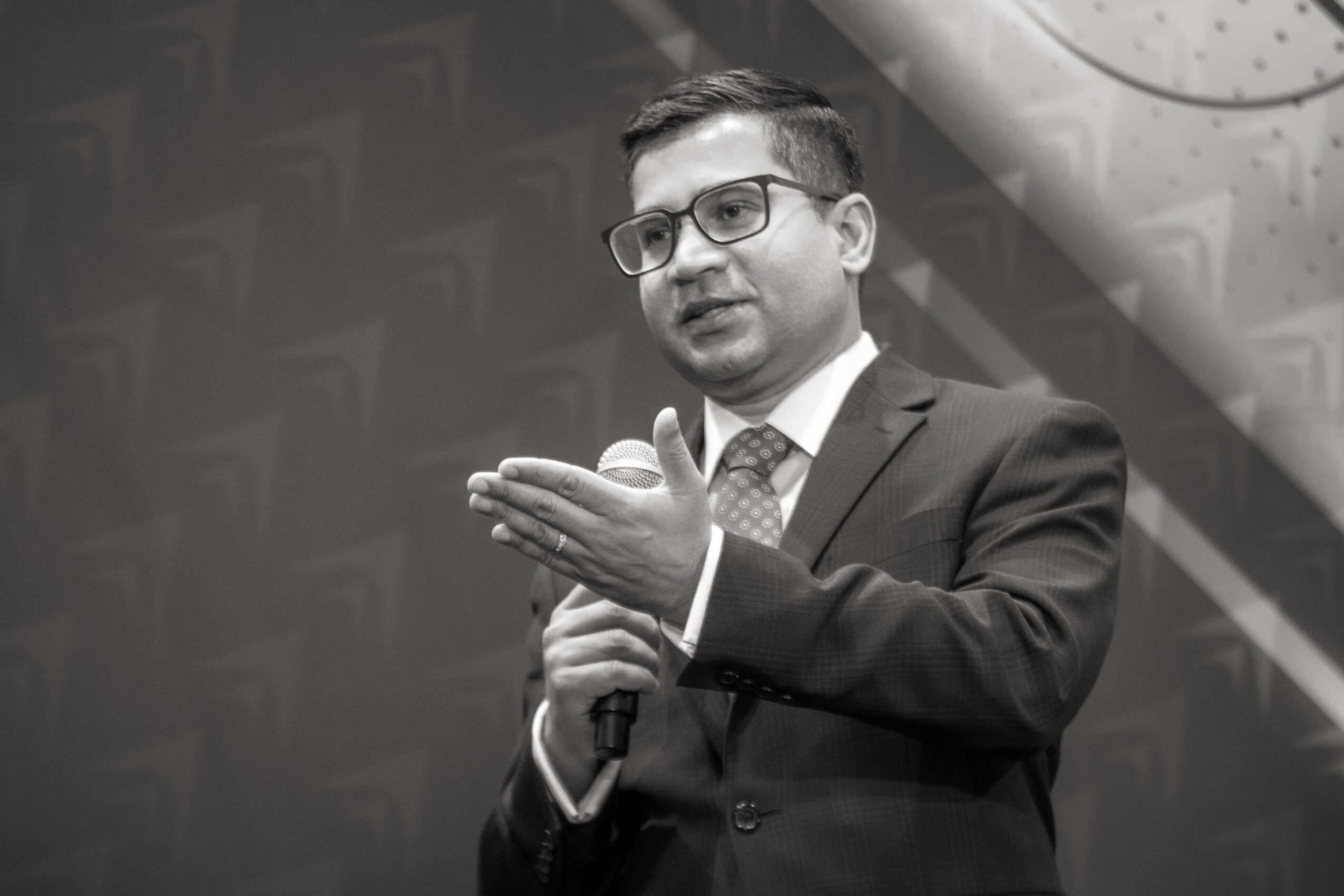





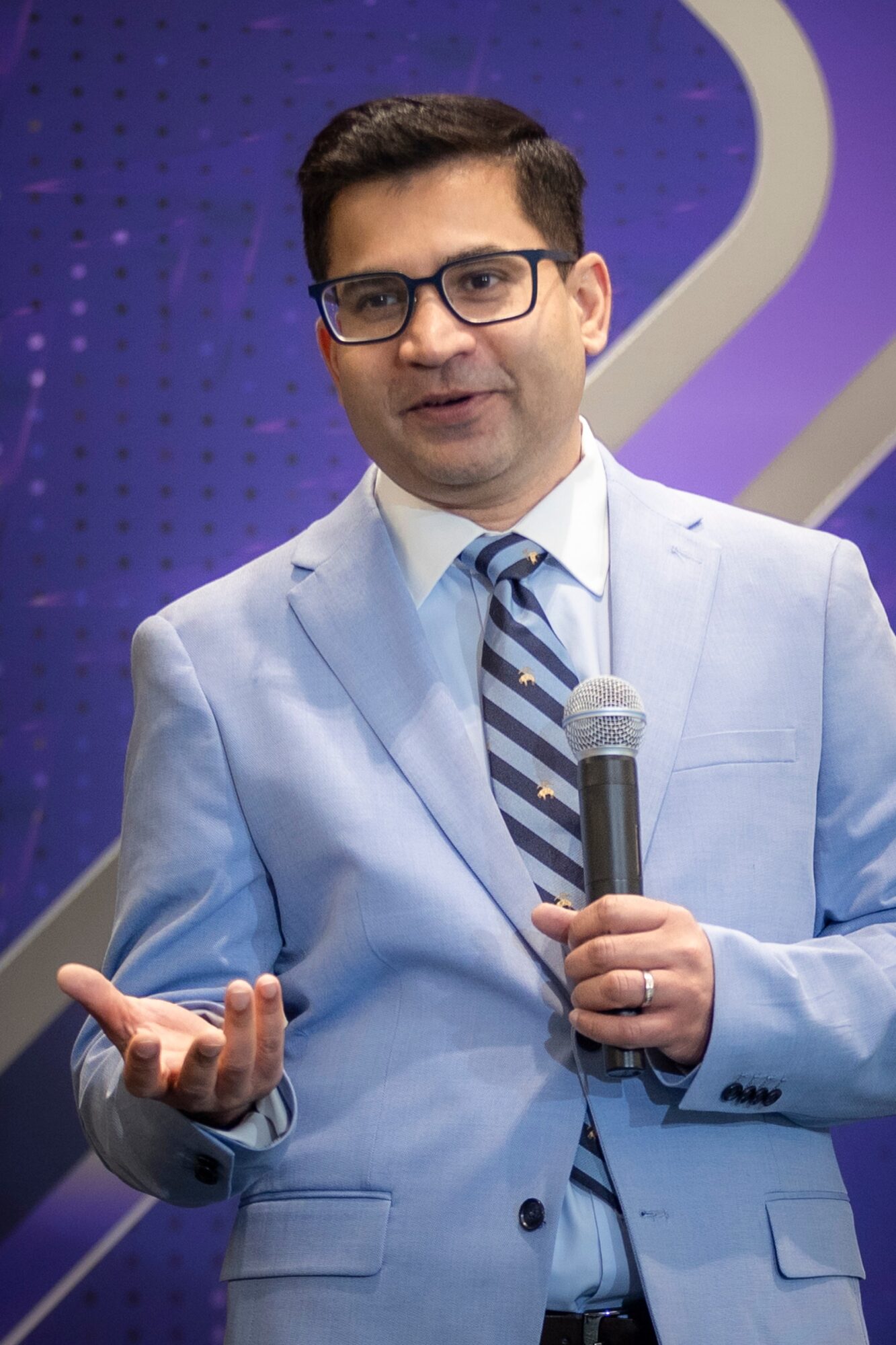
Today we’d like to introduce you to Muhammad Zeshan.
Hi Muhammad , so excited to have you on the platform. So before we get into questions about your work-life, maybe you can bring our readers up to speed on your story and how you got to where you are today?
My journey did not start at Harvard, in a psychiatry clinic, or in a medical school. It started when I was a teenager working as a waiter in my father’s small restaurant in Pakistan.
During my middle and high school years, I watched children my age and often younger drop out of school because of poverty. I also saw parents struggling to connect with their children. I wanted to help, so I would encourage parents to keep their children in school and tell children why education was important. But the more I tried to convince them, the more frustrated I became. I could not understand why they were not listening.
Then I came across the work of American psychologist Dr. Haim Ginott, who wrote about something remarkably simple yet powerful: the importance of listening to children.
It forced me to reflect on myself. I realized that I had been doing a lot of talking, advising, and telling people what they should do but I had never truly stopped to listen to why these children were leaving school.
When I started listening, their reality became clearer.
Some families barely had enough money for basic necessities. As children grew older, they wanted things that other children had—a modern haircut, matching clothes, a decent pair of shoes, or simply the dignity of not feeling different from their peers. Their parents often could not afford these things. For some children, earning money at a young age did not feel like a choice; it felt like a necessity. Eventually, work replaced school.
Listening changed my judgment into understanding.
At that time, I assumed these struggles existed because many parents in my neighborhood had limited financial resources or formal education. I thought perhaps educated and financially successful parents naturally knew how to connect with their children.
Years later, during my training at Harvard, I experienced a moment that completely challenged that belief.
I was working with a child whose parents were highly accomplished professionals affiliated with Harvard and MIT. Yet there I was, having a conversation with them about something I had discussed years earlier with families in my neighborhood in Pakistan: the importance of spending time with their child, listening, connecting, and being emotionally present.
That moment has stayed with me.
I realized that parenting is not determined by your bank account, your education, your profession, or the number of degrees hanging on your wall. Parenting is an art and like every art, it can be learned.
That realization became one of the foundations of my professional journey.
I went on to train as a child, adolescent, and adult psychiatrist, including specialized training at Boston Children’s Hospital, UMass in infant-parent mental health, and through the ZERO TO THREE Fellowship. But throughout that journey, I continued returning to the lesson I first learned as a teenager: before we can help people, we have to listen to them.
Becoming a father deepened that understanding even further. I realized that much of children’s mental health is shaped long before they ever enter a psychiatrist’s office. It develops through thousands of ordinary moments how we listen when they are upset, how we respond to mistakes, whether they feel safe sharing difficult emotions, and whether they know that their voice matters.
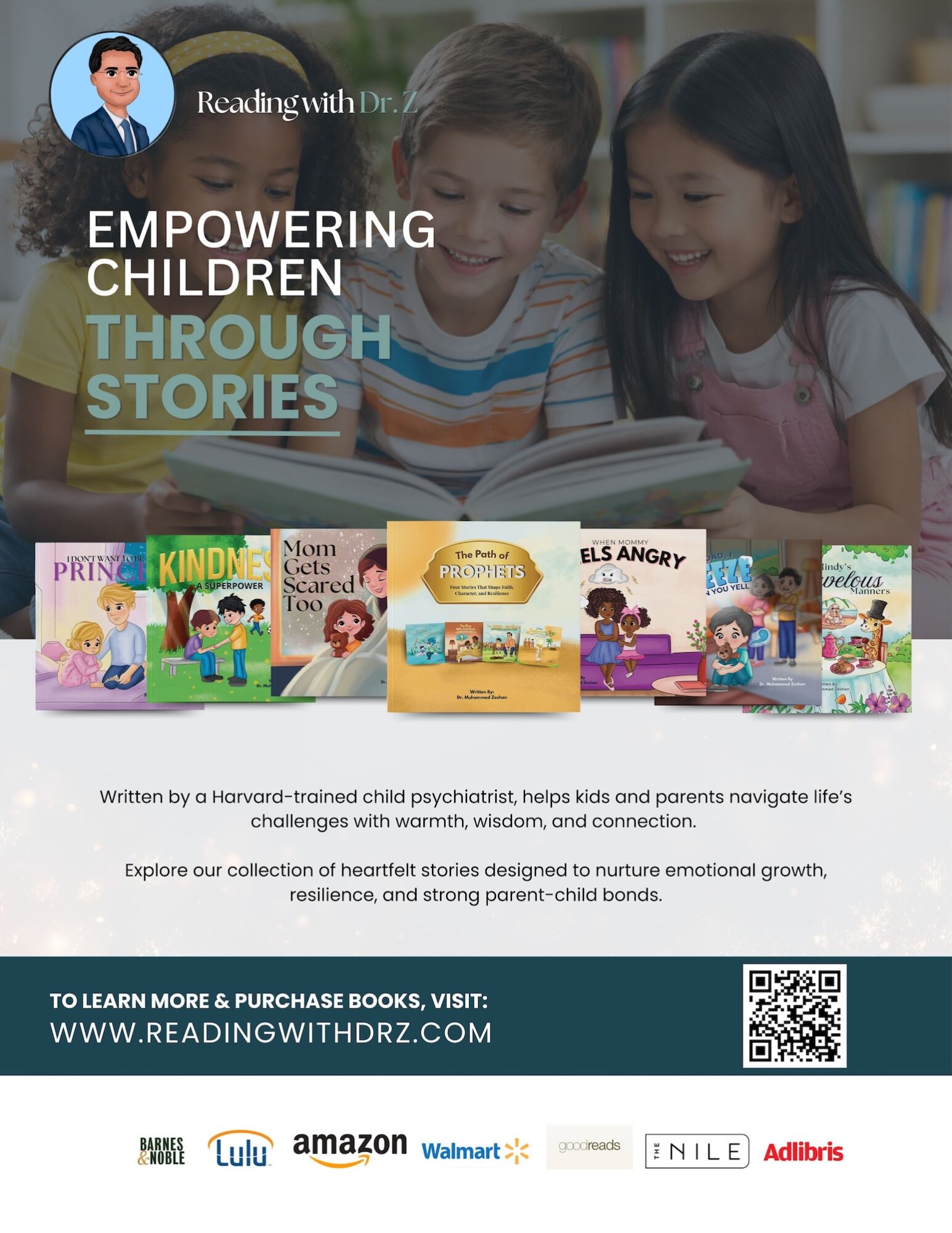
That belief inspired me to take my work beyond the walls of my clinic. Through Parenting with Dr. Z, I now have the privilege of sharing evidence-based parenting and mental health education with a global community of more than 400,000 followers. Through Reading with Dr. Z, I have published seven children’s storybooks designed to help parents and children begin conversations about emotions, resilience, relationships, and life’s challenges.
My work today spans psychiatry, teaching, writing, parenting education, coaching, advocacy, and global mental health and philanthropic initiatives. On the surface, these may seem like very different pursuits, but to me they are all connected by the same mission.
And sometimes I think back to that teenager carrying plates in his father’s restaurant, wondering why people wouldn’t listen to his advice.
It took me years to understand the irony.
I was trying so hard to make others listen to me that I had forgotten to listen to them.
That lesson has followed me from a small neighborhood in Pakistan to Harvard, from hospital rooms to classrooms, from my clinical practice to families across the world.
Today, whether I am sitting with one child in my office or speaking to hundreds of thousands of parents online, I try to begin in the same place:
Listen first. Understand before judging. Connect before correcting.
Because sometimes changing a child’s life doesn’t begin with having the perfect answer. It begins by making sure they know their voice matters.
Alright, so let’s dig a little deeper into the story – has it been an easy path overall and if not, what were the challenges you’ve had to overcome?
It has definitely not been a smooth road and, looking back, I am grateful that it wasn’t.
Coming to the United States as an international medical graduate meant learning much more than medicine. I had to understand a new healthcare system, adapt to cultural nuances, communicate across different backgrounds, and find my place in highly competitive academic environments. Eventually training at institutions such as Harvard and Boston Children’s Hospital was an incredible privilege, but getting there also meant confronting something many high-achieving people quietly experience: imposter syndrome.
There were moments when I questioned whether I belonged in those rooms. Over time, I realized that one of the biggest barriers to growth is not always the obstacle in front of us it can be the limitations, fears, and stories we carry within ourselves.
Two books that have influenced that journey are The Alchemist and The Mountain Is You. They reinforced for me that sometimes the mountain we are trying to climb is ourselves. My training in Maxwell Leadership coaching further taught me that leadership begins with self-awareness. Before we can effectively lead or inspire others, we have to be willing to recognize our own shortcomings, accept feedback, and continue working on ourselves.
I still experience setbacks and moments of self doubt. Growth did not make those disappear; it changed how I respond to them.
I have learned to see discomfort not necessarily as a sign that I am in the wrong place, but sometimes as evidence that I am entering a space where I still have room to grow.
The biggest barriers in our lives are not always the doors that others close. Sometimes they are the doors within ourselves that we are afraid to open.
My journey has taught me that success is not about eliminating your shortcomings. It is about having the humility to recognize them, the courage to work on them, and the resilience to keep moving forward even when you don’t feel completely ready.
We’ve been impressed with Inside Out CURE Psychiatry LLC , but for folks who might not be as familiar, what can you share with them about what you do and what sets you apart from others?
My work has grown around one central belief: mental healthcare should not simply reduce symptoms, it should help people understand themselves, strengthen relationships, and build healthier lives.
I founded Inside Out CURE Psychiatry LLC as a fee for service practice providing personalized psychiatric care for children, adolescents, adults, and families. The name “Inside Out” reflects my philosophy that meaningful and sustainable change often begins by understanding what is happening beneath the surface, not simply treating the behavior or symptom we can see.
I am now expanding that vision through Princeton Psychiatry & Wellness, a new insurance-based practice designed to make comprehensive psychiatric care accessible to more families. In addition to traditional psychiatric evaluation and medication management, we plan to incorporate innovative treatments such as Transcranial Magnetic Stimulation (TMS) and ketamine-based treatments when clinically appropriate, while continuing to emphasize psychotherapy, parenting, lifestyle, and family-centered approaches.
Another exciting chapter for me is my fellowship training in Integrative Medicine through the University of Arizona. My hope is to increasingly integrate evidence-based approaches involving nutrition, sleep, physical activity, stress management, relationships, and other lifestyle factors alongside conventional psychiatric treatment. I believe the future of mental healthcare requires us to ask not only, “Which medication might help?” but also, “How is this person sleeping? What are they eating? Are they moving their body? What relationships surround them? What is happening in their environment, and what gives their life meaning?”
My work also extends far beyond the clinic. Through @ReadingwithDrZ, I have published seven children’s storybooks that use storytelling to help children and parents talk about emotions, resilience, relationships, and difficult life experiences. Through @ParentingwithDrZ, I share evidence-based parenting and mental health education with more than 400,000 followers around the world.
What I am most proud of is not any single practice, book, or social media platform. It is that they are gradually becoming different expressions of the same mission: making mental health knowledge practical, compassionate, culturally responsive, and accessible.
What I hope ultimately sets our work apart is our willingness to look at the whole person rather than simply the diagnosis, combining science and innovation with human connection.
Whether that happens through a psychiatric consultation, TMS, an integrative approach, a conversation with a parent, or a children’s storybook, the goal remains the same:
Healing minds, strengthening relationships, and inspiring healthier lives.
What would you say have been one of the most important lessons you’ve learned?
The most important lesson I have learned is surprisingly simple: listen before you try to lead, and understand before you try to change someone.
I first learned this as a teenager in Pakistan. I was trying to convince children in my neighborhood to stay in school, but I was so focused on telling them what was best that I failed to understand why they were leaving. Once I truly listened, I began to understand the poverty, family responsibilities, and circumstances behind their decisions. That experience taught me that good intentions without understanding can still miss the person in front of you.
Years later, that lesson followed me into psychiatry, parenting, leadership, and even fatherhood. Whether I am sitting with a child, guiding a parent, leading an organization, or examining my own shortcomings, I have learned that meaningful change rarely begins by having the perfect answer. It begins with curiosity, humility, and connection.
I have also learned that growth requires becoming comfortable with being uncomfortable. Some of the biggest obstacles I have faced were not external they were my own fears, self doubt, and limitations.
Today, I try to remind myself of three principles:
Listen before speaking. Understand before judging. And never become so successful that you stop being a student.
The more I learn, the more I realize that leadership is not about having all the answers. It is about continuing to grow while helping others discover the strength within themselves.
Contact Info:
- Website: https://insideoutmz.com
- Instagram: https://www.instagram.com/insideout.cure
- Facebook: https://www.facebook.com/ParentingwithDr.Z
- LinkedIn: https://www.linkedin.com/in/muhammad-zeshan-673297173
- Twitter: https://x.com/muhammadzeshand
- Youtube: https://www.youtube.com/@parentingwithdr.z
- Other: https://readingwithdrz.com