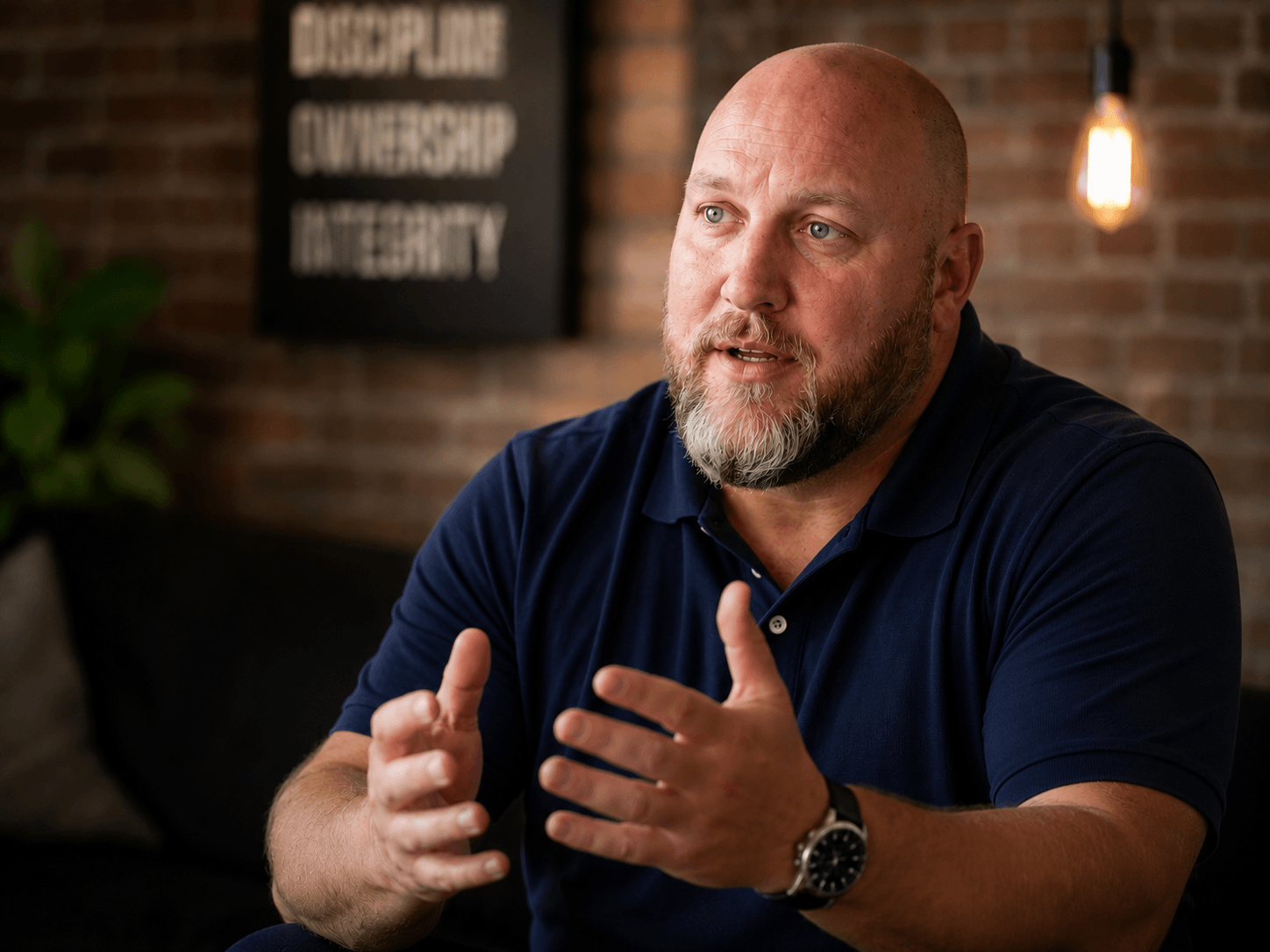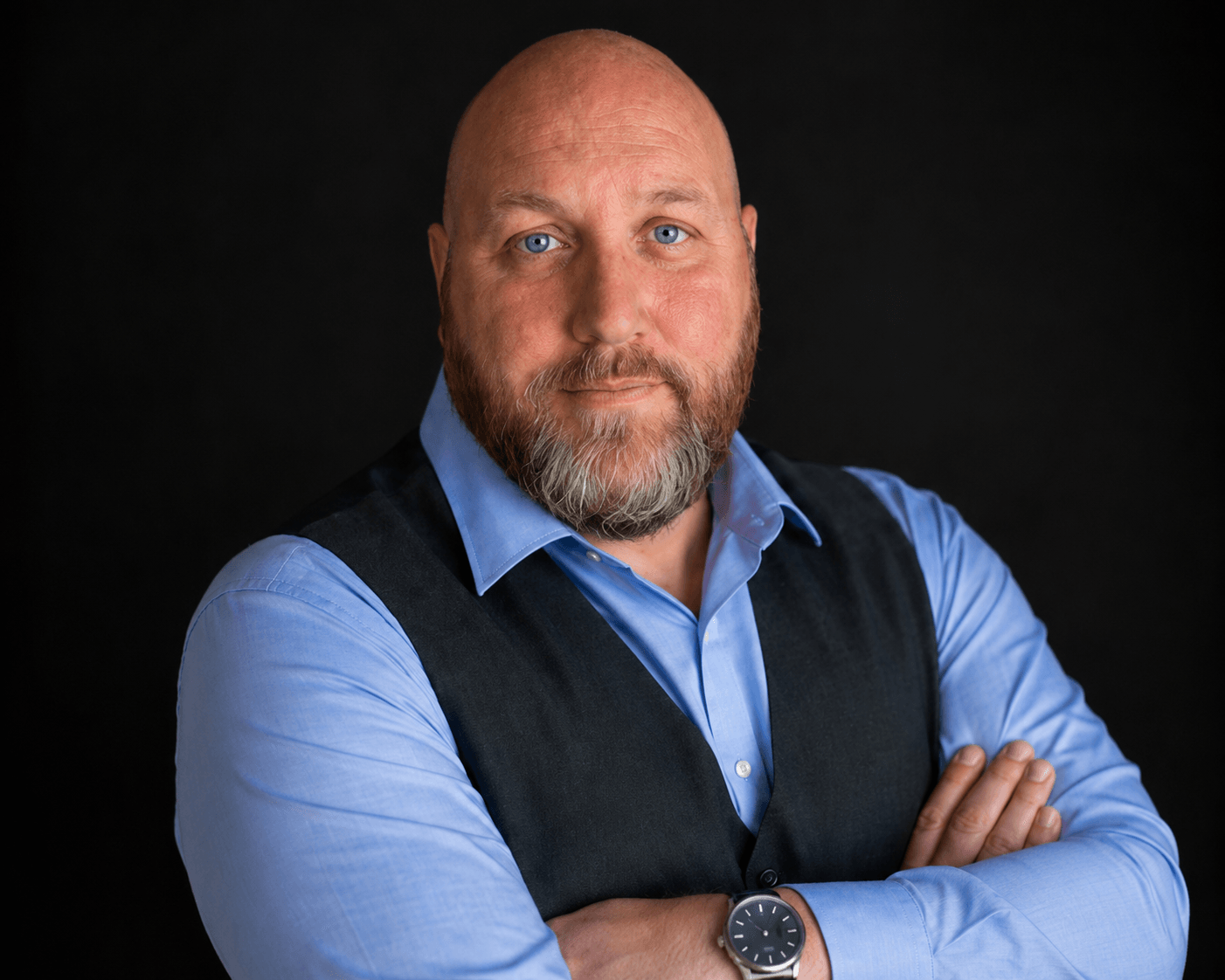





Today we’d like to introduce you to Michael Crismali.
Hi Michael, we’re thrilled to have a chance to learn your story today. So, before we get into specifics, maybe you can briefly walk us through how you got to where you are today?
I’ve worn many hats throughout my life, but if there’s one thing I’ve learned, it’s that the titles we carry rarely tell the whole story of who we are.
I was born and raised on Staten Island, New York, and for much of my adult life, I followed a path that probably looked fairly conventional from the outside. I built a career in the mortgage industry, working as both a loan officer and sales manager. I became a volunteer firefighter, an experience that profoundly shaped my understanding of service, sacrifice, and community. Along the way, I discovered a passion for public speaking and an ability to connect with people through storytelling. I was building a life around helping others, raising my children, and trying to become the kind of man I believed I was supposed to be.
But life has a way of exposing the distance between the person we present to the world and the person struggling beneath the surface.
Several years ago, I found myself navigating an incredibly difficult period of my life. My marriage was falling apart, financial pressures were mounting, and I was losing my sense of direction. During that time, I made decisions that violated the trust of people who meant a great deal to me. Those decisions ultimately resulted in criminal charges, public humiliation, and the loss of relationships, accomplishments, and an identity I had spent decades building.
I don’t share that part of my story to excuse my actions or to ask for sympathy. I share it because what happened afterward completely changed the trajectory of my life.
There was a time when I genuinely believed that my worst decisions had permanently disqualified me from ever becoming someone worthy of respect again. I struggled with shame, guilt, and the overwhelming fear that the rest of my life would be defined by the worst chapter of it. I discovered just how difficult it can be to look in the mirror when you no longer recognize the person staring back at you.
Eventually, though, I began to understand something that would become the foundation of everything I do today: We are responsible for the choices we’ve made, but we are also responsible for the choices we make next.
That realization didn’t erase my past or eliminate the consequences of my actions. Instead, it challenged me to stop allowing those consequences to determine the limits of my future.
I began rebuilding my life, not by pretending the past hadn’t happened, but by confronting it honestly. Writing became an important part of that process, and what started as a deeply personal attempt to make sense of my experiences eventually grew into my first published book, My Name is…… It is a story about identity, accountability, redemption, and the extraordinary difficulty of learning to forgive yourself when you know you’ve hurt others.
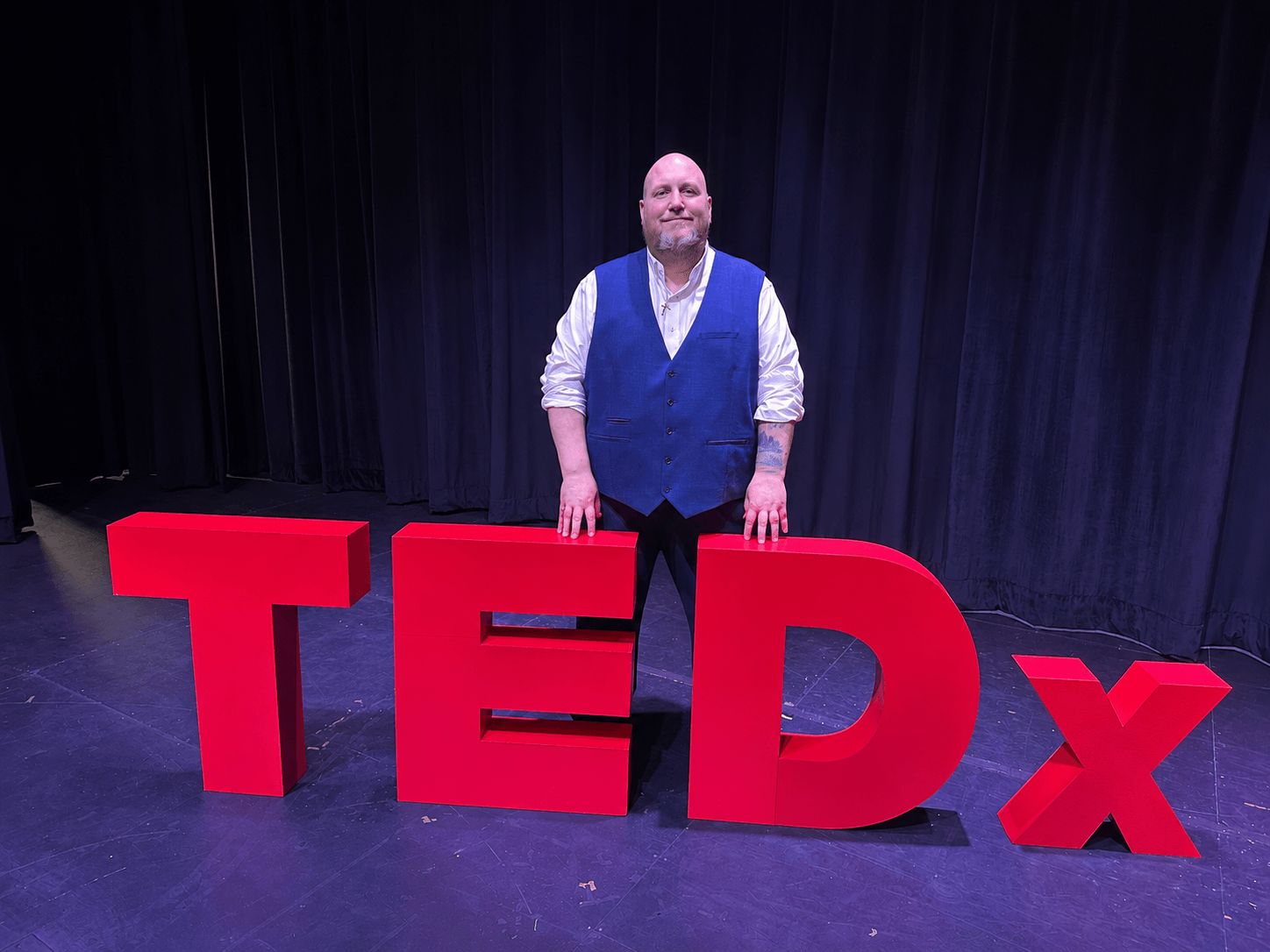
Today, I’m a published author, TEDx speaker, keynote speaker, and professional presenter. Through my speaking engagements, I work to challenge the way people think about failure, resilience, self-worth, and the possibility of personal transformation. I also spend a significant amount of time working with older adults in assisted living communities, creating educational and entertaining programs that encourage curiosity, connection, and lifelong learning. That work has been especially meaningful because it constantly reminds me that every person has a story, and every stage of life still offers opportunities to grow.
I’ve also been fortunate to compete in national speaking competitions, including being selected among the Top 100 speakers from a field of approximately 5,000 participants in the Next Top Speaker Tournament. Each opportunity to step onto a stage reminds me how far I’ve come from the days when I was afraid to have my name associated with anything at all.
Perhaps the greatest transformation, however, has been in how I define success. There was a time when I measured it by professional accomplishments, recognition, and the opinions of others. Today, I measure it by the impact I can have on another human being. If sharing the most difficult parts of my life helps someone recognize that their own story isn’t finished, then those experiences have found a purpose far greater than I could have imagined.
I’m still a work in progress, and I suspect I always will be. I’ve learned that redemption isn’t a destination we arrive at one day, but rather a commitment we make through the way we choose to live.
My story isn’t about a man who fell and somehow managed to get back up. It’s about discovering that even after losing almost everything you thought made you who you were, you still have the power to decide who you’re going to become.
And today, helping other people recognize that same possibility has become my life’s work.
We all face challenges, but looking back would you describe it as a relatively smooth road?
Smooth would probably be the last word I would use to describe my journey. In many ways, the road I’ve traveled has been filled with potholes, detours, and moments when I genuinely wondered whether there was even a road left in front of me.
Like most people, I’ve experienced my share of personal and professional challenges. I’ve dealt with financial uncertainty, the breakdown of a marriage, difficult family relationships, and the everyday pressures of trying to provide for my children while keeping the rest of my life together. For a long time, I became very good at convincing the world that everything was fine, even when things were unraveling behind the scenes.
But some of my greatest struggles weren’t things that happened to me. They were things I brought upon myself.
When the consequences of my decisions finally caught up with me, I lost far more than professional opportunities or relationships. I lost my sense of identity. For years, I had proudly identified as a firefighter, a father, a leader, and someone people could depend on. Suddenly, I was confronting the reality that I had betrayed some of the very values I claimed to represent. People I considered family were understandably angry and hurt, and relationships I had spent decades building were fractured, some beyond repair.
There is a particular kind of loneliness that comes with knowing you are responsible for much of the pain you’re experiencing. It’s difficult to ask for compassion when you’re struggling to extend any to yourself.
One of the hardest parts of that experience was discovering how quickly shame can convince you that your worst decisions are the most important things anyone needs to know about you. I became painfully aware of how easily a person’s entire existence can be reduced to a headline, a Google search, or a single chapter of their life. Eventually, I began doing that to myself. I wasn’t simply acknowledging that I had done something wrong. I was beginning to believe that doing something wrong was all I would ever be known for.
Rebuilding from that place was extraordinarily difficult. There wasn’t some magical morning when I woke up feeling forgiven, confident, or ready to take on the world. There were countless days when I questioned my worth, my future, and whether anyone would ever take me seriously again. I had to learn how to accept responsibility without allowing that responsibility to become a permanent sentence of self-hatred.
And perhaps most painfully, I had to accept that not everyone would be willing to accompany me into the next chapter of my life. Some relationships could not be repaired, regardless of how much I wished things could be different. I eventually realized that accountability also means respecting the feelings of the people you’ve hurt, even when that means accepting their absence from your life.
What helped me move forward was recognizing that I couldn’t change what had already happened, but I could change what happened next. I started focusing less on convincing people that I had changed and more on actually becoming someone whose actions demonstrated it. There is an enormous difference between wanting redemption and being willing to do the uncomfortable, often unrecognized work necessary to rebuild your character.
Even pursuing a career as a speaker and author came with its own challenges. Imagine standing in front of an audience and openly discussing the very experiences you once prayed nobody would ever discover. There is tremendous vulnerability in that. Every time I share my story, I understand that some people may judge me, dismiss me, or decide that my past makes me unworthy of being heard. I’ve had to become comfortable with the fact that I cannot control those reactions.
But I’ve also discovered something extraordinary along the way. The experiences I once believed had permanently destroyed my ability to make a difference have become the very experiences that allow me to connect with people who are struggling with their own feelings of guilt, regret, or inadequacy.
I certainly wouldn’t describe my life today as free of challenges. I’m still navigating uncertainty, still learning, and still trying to become a better version of myself. There are days when the weight of the past feels heavier than others. The difference is that I no longer believe a difficult day means I’ve lost the progress I’ve made.
If there’s one thing this journey has taught me, it’s that rebuilding a life requires more than simply surviving what knocked you down. It requires the courage to examine what brought you there, the humility to acknowledge your responsibility, and the willingness to keep moving forward even when the people around you cannot yet see the person you’re trying to become.
I’ve learned that the hardest part of rebuilding your life isn’t convincing the world that you deserve another chance. It’s learning to believe that you have an obligation to make something meaningful out of the chance you still have.
Alright, so let’s switch gears a bit and talk business. What should we know about your work?
At the heart of everything I do is storytelling. I’m a published author, TEDx speaker, keynote speaker, and professional presenter, but I’ve never believed that the true measure of a speaker is how eloquently they can deliver a message. I believe it’s what happens to the people listening long after the presentation has ended.
My work primarily focuses on identity, redemption, resilience, personal accountability, and the extraordinary capacity we have to reinvent ourselves. I challenge audiences to reconsider the labels they place on themselves and others, particularly when those labels are rooted in failure, regret, or experiences from the past. My message isn’t that our mistakes don’t matter. Quite the opposite. I believe they matter tremendously, and that taking responsibility for them is essential. But I also believe that no human being should be reduced to the worst thing they’ve ever done.
What makes my approach different is that I don’t deliver these messages from the comfortable position of someone who has simply studied adversity. I’ve lived through the consequences of my own failures, including the public exposure of decisions that cost me relationships, accomplishments, and much of the identity I once held so dearly. I understand what it feels like to become a stranger to yourself, to wonder whether your name will ever represent something positive again, and to face the uncomfortable reality that rebuilding your reputation begins with rebuilding your character.
That experience became the foundation for my first published book, My Name is….., a deeply personal exploration of identity, shame, responsibility, and self-forgiveness. Writing it was one of the most challenging things I’ve ever undertaken. It required me to revisit experiences I would have preferred to forget and confront truths about myself that weren’t always flattering. But I wanted to create something that would reach the person sitting alone, convinced that their past has permanently eliminated the possibility of a meaningful future.
As a speaker, I bring that same philosophy to the stage. I believe audiences deserve authenticity rather than perfectly polished stories that make personal transformation seem effortless. I’m not interested in portraying myself as someone who has figured everything out. I want people to recognize that growth is often uncomfortable, progress is rarely linear, and even the most meaningful transformations are built through ordinary decisions made consistently over time.
My speaking also extends beyond my personal story. I explore subjects such as the importance of human connection, the power of seemingly insignificant choices, the overlooked value of boredom and reflection, and the ways our assumptions about ourselves can limit our potential. I’m fascinated by the psychology of everyday life and particularly enjoy challenging audiences to see familiar experiences from an entirely different perspective.
Another important part of my professional life involves creating and delivering educational and entertaining presentations for older adults in assisted living communities. These programs cover everything from history and culture to science, entertainment, and human behavior. It’s work I genuinely love because it combines my natural curiosity with my passion for connecting with people. I firmly believe that curiosity has no expiration date and that meaningful intellectual engagement should remain part of our lives regardless of age.
Professionally, I’ve been fortunate to experience some wonderful milestones, including becoming a published author, earning opportunities to speak on the TEDx stage, and being recognized among the Top 100 participants in the Next Top Speaker Tournament, which began with approximately 5,000 speakers. Those accomplishments mean a great deal to me, particularly because there was a time when I questioned whether I would ever have the confidence to stand in front of an audience again.
But if you ask what I’m most proud of, the answer goes beyond any book, speaking engagement, or professional recognition.
First and foremost, I’m proud to be a father. My children have given my life a sense of purpose that no professional accomplishment could ever replace. They are a constant reminder that the legacy we leave behind has far less to do with what we achieve publicly than with the kind of people we choose to be privately.
I’m also incredibly proud that I found the courage to reclaim my own name. That may sound unusual, but there was a period when I was genuinely ashamed to introduce myself. I worried about what people might discover, what they might think, and whether my past would always arrive in a room before I did. Today, I put my name on the cover of a book and stand on stages openly sharing the experiences I once wanted to hide. For me, that represents a transformation more meaningful than any award I could receive.
I think what sets me apart is that I’m not trying to sell people the illusion of a perfect life. I’m asking them to consider the possibility of a meaningful one, even when their circumstances are imperfect and their past contains chapters they wish they could rewrite.
Ultimately, I don’t want to be remembered simply as a speaker who delivered a powerful presentation or an author who wrote a compelling book. I want to be remembered as someone who made people think differently about themselves, who helped them recognize possibilities they had stopped believing existed, and who reminded them that their lives still have extraordinary value.
If someone walks away from hearing me speak or reading my book with a little less shame, a little more courage, and a renewed belief that their story is still being written, then I consider my work a success.
Do you have any memories from childhood that you can share with us?
Some of my fondest childhood memories aren’t tied to a particular event or celebration, but rather to a place that has remained incredibly important to me throughout my life: the beach.
For much of my adolescence, I lived with my grandparents on Staten Island, and my bedroom faced the ocean. I had the extraordinary privilege of falling asleep to the sound of the waves and waking up to a view that never seemed to look quite the same twice. Even as a young boy, I found something deeply comforting about the ocean. It became my sanctuary, a place where the rest of the world seemed to grow quieter and where I could simply exist without the pressures or distractions of everyday life.
One of my favorite things to do was watch thunderstorms roll across the water. While most people sought shelter from the storm, I was captivated by it. I would watch brilliant flashes of lightning illuminate the sky, revealing the enormous power of the ocean beneath it. There was something magnificent about witnessing such extraordinary beauty and violence existing simultaneously. I was fascinated by the realization that something could be so powerful, unpredictable, and intimidating, yet somehow bring me such an overwhelming sense of peace.
The ocean was also the backdrop for one of my family’s most cherished traditions. For more than 20 years, we spent a week every summer vacationing on Long Beach Island, New Jersey. Those trips became something I eagerly anticipated year after year. There was something wonderful about the familiarity of returning to the same place, knowing that for one week, the routines and responsibilities of everyday life would give way to family, laughter, and long summer days at the shore. I spent countless hours in the ocean, swimming, riding the waves, and allowing the water to carry me wherever it wanted. I don’t think I’ve ever experienced a greater sense of freedom than I did during those moments. There was no clock to watch, no destination to reach, and nothing demanding my attention. It was simply me and the ocean, and somehow, that was always enough.
What I couldn’t have known at that age was just how important that relationship with the ocean would become later in my life.
Decades later, when I found myself navigating some of the darkest and most difficult chapters of my life, I instinctively returned to the beach. There were times when I didn’t have the words to explain what I was feeling, when the weight of regret, uncertainty, and emotional exhaustion seemed almost unbearable. During those moments, I would sit beside the water and simply listen. Somehow, the rhythm of the waves helped quiet the noise inside my head. The ocean didn’t offer answers or make my problems disappear, but it gave me something I desperately needed: the space to breathe, reflect, and find the strength to face another day.
Looking back, I find something incredibly meaningful about that connection. The same ocean that filled my childhood with wonder, gave my family decades of memories, and offered me an incomparable sense of freedom would eventually become a source of comfort for a grown man struggling to rediscover his own.
Perhaps that’s what I’ve always loved most about the ocean. It has never needed to be calm to be beautiful. I’ve watched it endure countless storms, its surface battered by wind and rain, only to eventually return to that familiar rhythm that first brought me peace as a child.
I suppose my favorite childhood memory isn’t simply one particular day at the beach. It’s the realization that a place which brought me so much joy and freedom as a young boy would one day help me find the strength to navigate the greatest storms of my adult life.
Contact Info:
- Website: https://www.legacywordservices.com
- Facebook: https://www.facebook.com/michael.v.crismali
- LinkedIn: https://www.linkedin.com/in/wordmaven/
- Youtube: https://youtu.be/oaELAyTM_UE?si=bfLF8KIdrD3ujODm
- Other: https://www.tiktok.com/@mc.theoriginal?lang=en