





Today we’d like to introduce you to Román Baca.
Hi Román, thanks for sharing your story with us. To start, maybe you can tell our readers some of your backstory.
I started dancing because of a friend in high school. She was a ballerina, and after I saw her perform, I wanted to know what that kind of discipline felt like. I trained at a little studio in a strip mall in New Mexico, then at the Nutmeg Ballet Conservatory in Connecticut, and I danced as a professional for a few years.
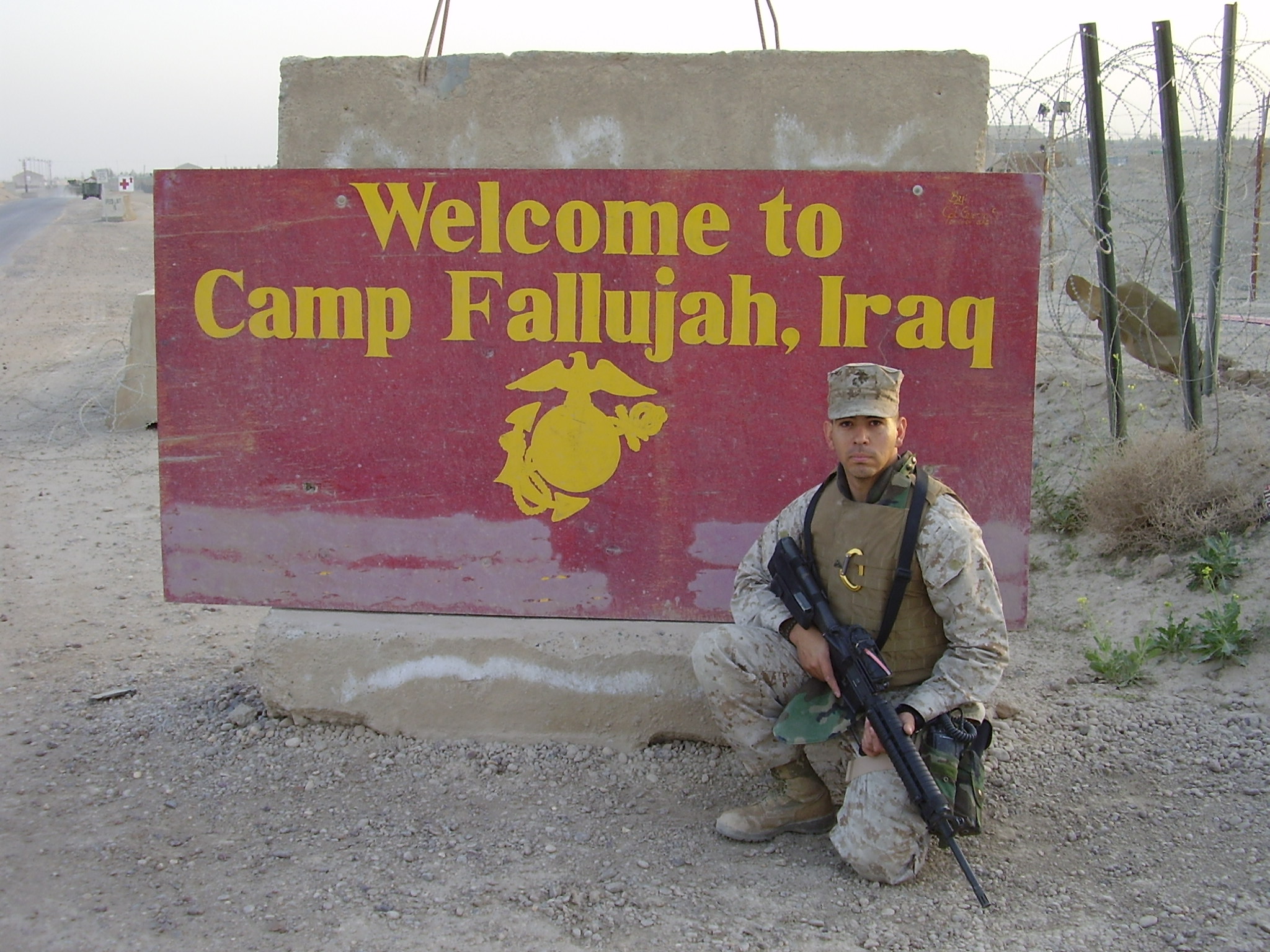
In 2001 I walked into a recruiter’s office and said, “I want to help people who can’t help themselves.” My grandfather had served, and I didn’t want to shirk the challenge of testing my mettle. A few months later came 9/11, and our unit was just waiting for its turn. I deployed to Fallujah as a machine gunner and fire team leader. For a long time I didn’t tell anyone I was a dancer. When I finally did, not only did they think it was not that big of a deal, some of them wanted to help tell our story after our service.
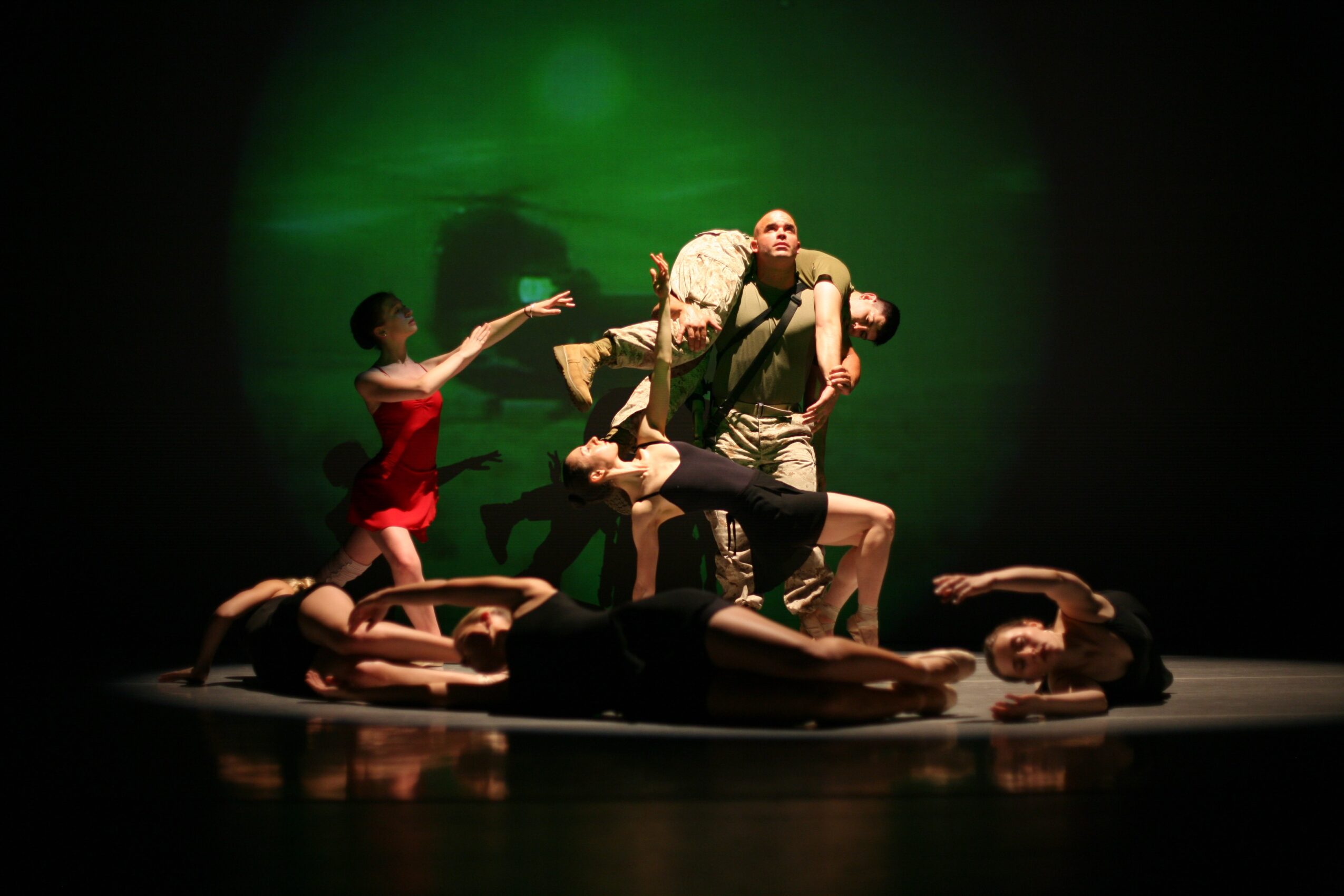
Coming home was harder than going. I was mean and angry and depressed, and my wife told me I wasn’t the same person. Then she asked me what I’d do if I could do anything in the world. The answer was dance. So we started Exit12. We tell the stories of war on stage, and we give veterans a place to work through what they carry by moving.
Today I’m still asking the same question: how do we take an experience that so few people understand, share those experiences, and inspire audiences to do something?
I’m sure it wasn’t obstacle-free, but would you say the journey has been fairly smooth so far?
No, it hasn’t been smooth, and I don’t think it’s supposed to be.
The first struggle was just being a man who dances. When I enlisted, I didn’t tell anybody. At boot camp a couple of guys found out, and one of them stopped speaking to me. In Fallujah I waited a long time to tell my unit, because I was afraid they would look at that before they would look at my real performance. As it turned out, they didn’t care. But I carried that fear for a while.
The harder struggle came after I got home. I wasn’t the person I was before I left for the war. I had anxiety, I had anger, and there were moments when I was mean and depressed. Making dances is how I started working through it. To me, dance is a physical demonstration of an abstract idea: your body shows what’s happening in your mind. Some of it I still haven’t settled. There was an incident at a checkpoint in Iraq where I never really came to terms with the right or wrong of it, so I put it on stage to explore it more.
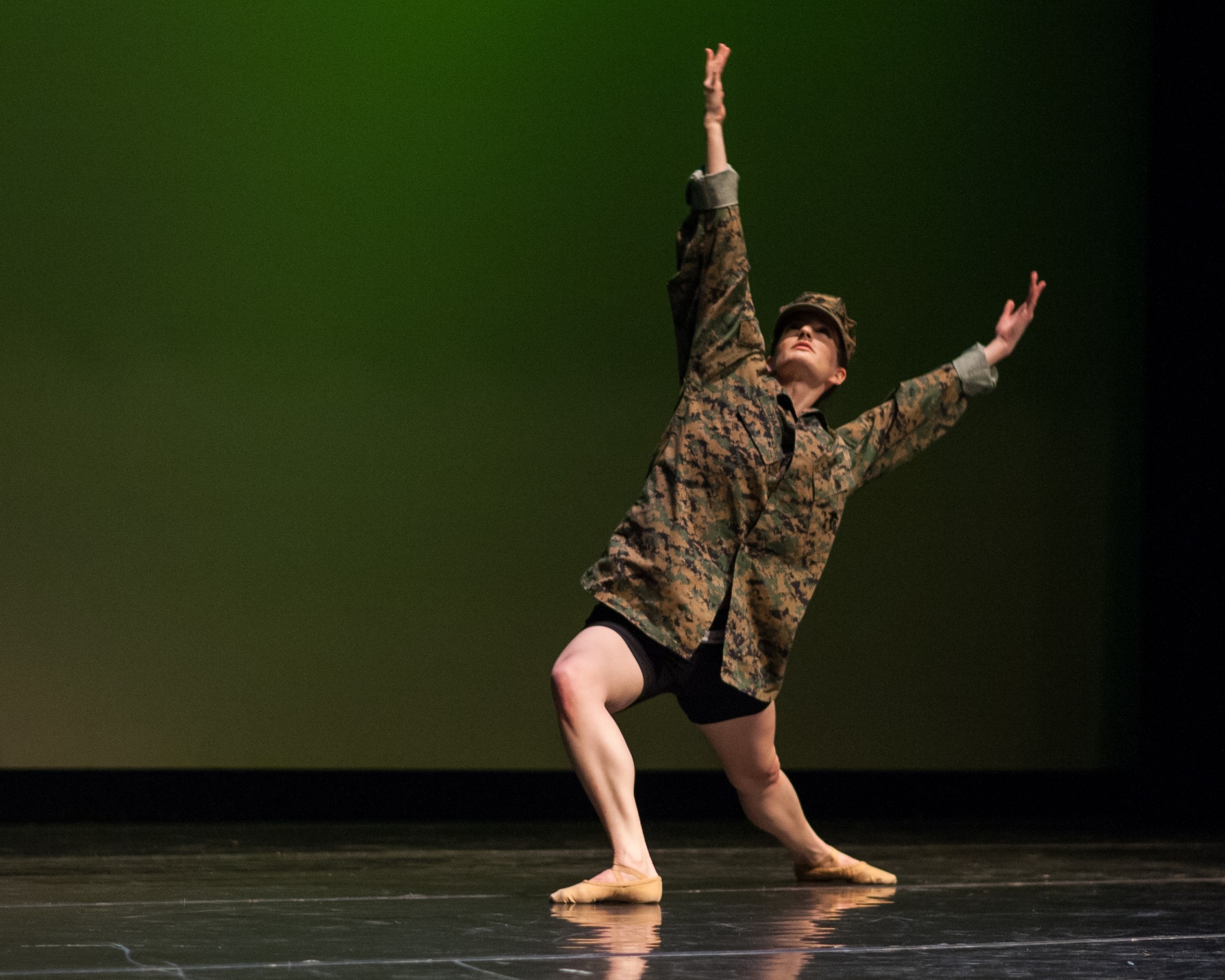
Then there’s convincing my own community. In the military, the arts aren’t usually seen as something for us. A lot of veterans have never set foot in a dance studio, and the idea can feel foreign or soft. But the military already teaches movement. In boot camp you learn to tie a specific movement to a specific task, like every bayonet strike accented by yelling “kill.” In our workshops, we invite veterans to take those trained movements and reimagine them. Once someone feels that, they get it. Getting them in the door is the hard part, and that education is still ongoing.
And there’s the search for sustainability. Doing this work well means being there for people year after year, not for one workshop or one season. Building a company that can keep showing up for veterans and their families has been a constant effort, and it’s one I’m still working on.
There’s also the struggle of being seen clearly. A lot of people picture veterans as mindless robots whose only job is to kill. I held some of those stereotypes myself before I served. Getting past them, in my own head and in an audience’s, is still part of the work.
Can you tell our readers more about what you do and what you think sets you apart from others?
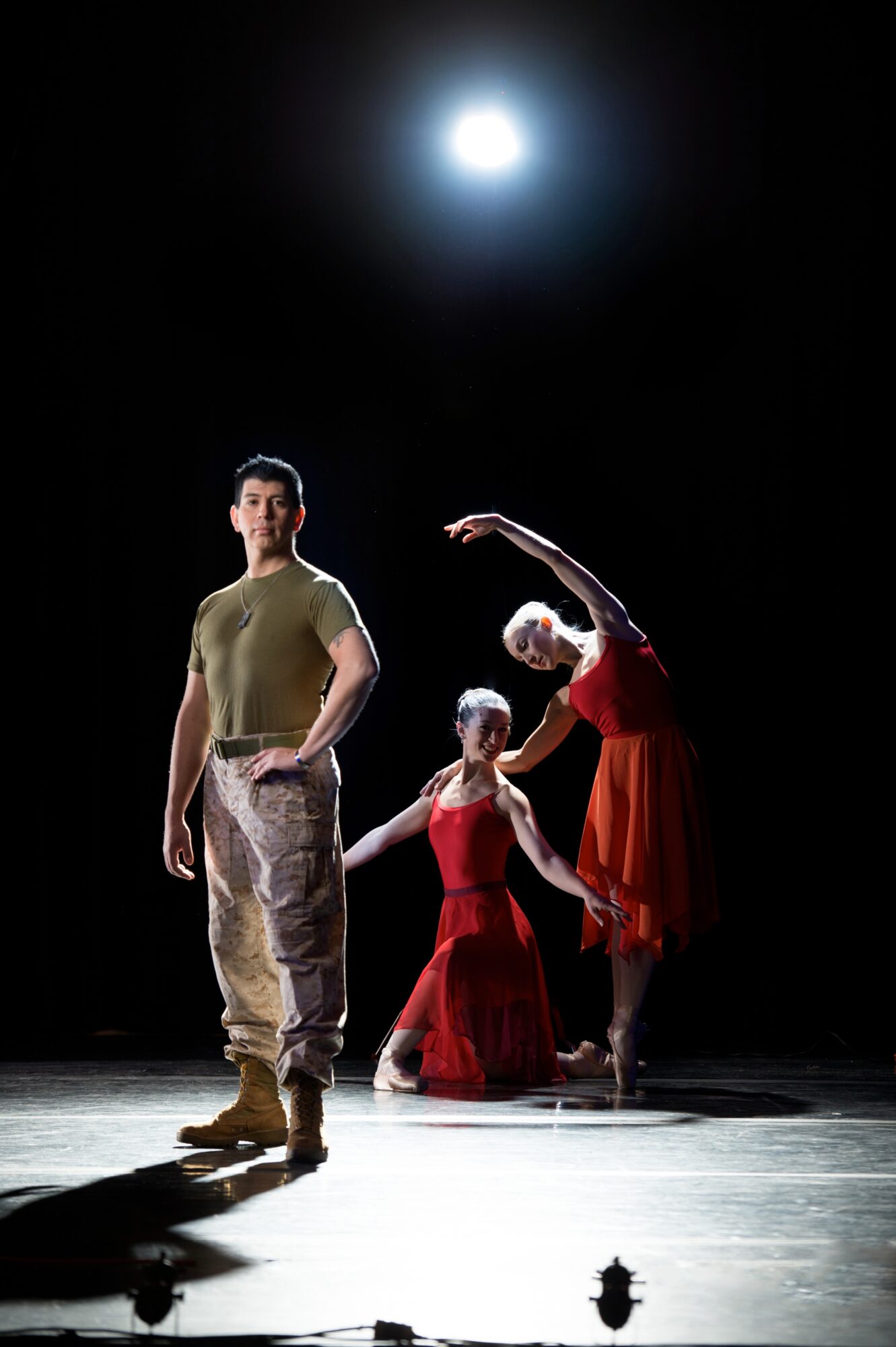
I’m an artist. For a long time I introduced myself as a Marine, a dancer, or a choreographer, but “artist” is the word that holds all of it. I’m the artistic director of Exit12 Dance Company in New York, which I started with my wife. We make work about the lasting effects of violence and conflict, and we work directly with veterans and military families.
That work happens in two places. On stage, we tell stories most audiences never get close to. Habibi Hhaloua was about my platoon, the people I served with in Iraq, and I performed it with members of my unit. Homecoming follows a deployment from the families waiting at home, to a checkpoint in Iraq, to the reunions at the airport. We’ve done a military-themed Nutcracker, performances on the deck of the Intrepid on Memorial Day, and a new Rite of Spring that looks at the ballet’s ties to the start of World War I. We are currently making a new work with military connected students at the City University of New York’s John Jay College, turning their experiences in and out of uniform into movement.
In the studio, we run workshops where veterans use movement to process what they carry. The military already teaches you to tie a movement to a task. We help people take those movements back and give them a new meaning.
What I’m most proud of is a workshop in Erbil, in northern Iraq. We had 30 young people, half from Kirkuk and half from Erbil, and on the first day they didn’t want to be in the same room. Five days later they had made a dance together and become friends. I went back to Iraq to teach, not to fight, and I hope they left knowing that we care about what happens to them after we leave.
What sets us apart is that we’ve lived it. One percent of our population serves in the military, and an even smaller number serves in war. I’ve been the Marine and I’ve been the dancer, so I can stand in both rooms. And I don’t want audiences to just watch. I want to motivate them to do something.
So, before we go, how can our readers or others connect or collaborate with you? How can they support you?
If you have a military connection, whether you served yourself or love someone who did, you already understand part of what we do. Our work is built from those experiences: the leaving, the coming home, and everything in between. Many people tell us they finally see their own story, or their family’s, reflected on stage. That’s where getting involved starts.
The simplest way is to come see us. Bring someone with you, especially someone who’s never been to a dance performance. Stay for the talkback afterward and ask your questions. Those conversations are a big part of why we do this.
Thursday, November 12
Doors 6:30 PM | Show 7:00 PM
Gerald W. Lynch Theater at John Jay College
524 West 59th Street (between 10th & 11th Aves), NYC
Stay after the show for an audience talkback.
Tickets: $30 general admission | $5 for veterans and students.
https://geraldwlynchtheater.com/events/2026-artist-in-residence-exit-12-world-premiere-stories-of-war/
You can also give. Exit12 is a nonprofit, and every donation helps us keep showing up for veterans and their families year after year, in the studio and on stage.
And you can give your time. Volunteer with us, tell a veteran in your life about our workshops, or share our work with someone who needs it. One percent of our population serves, but everyone has a part to play in welcoming them home.
Contact Info:
- Website: https://exit12danceco.org
- Instagram: exit12danceco