




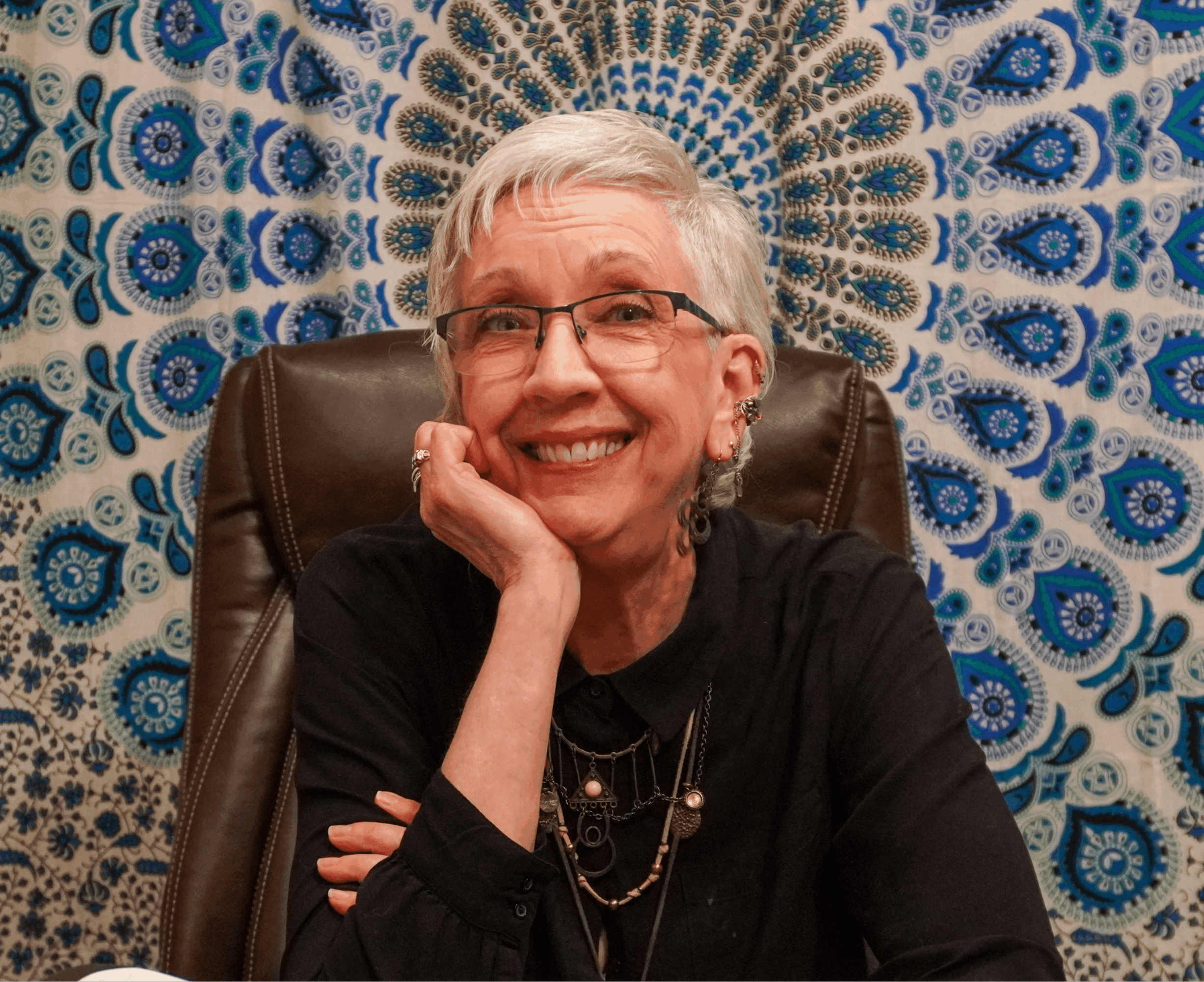
Today we’d like to introduce you to Carol Boyer.
Hi Carol, can you start by introducing yourself? We’d love to learn more about how you got to where you are today?
I came to my career in counseling through an existential crisis, and ironically – or perhaps not! – I became an existential counselor. Prior to that, I had spent many years in the corporate world as an administrative assistant, a job I enjoyed and at which I excelled, but as I reached my mid-forties, I began to feel that my work lacked meaning and a sense of personal fulfillment. I was good at my job, but I wanted more. There were opportunities for advancement at the company where I worked, but I wanted to do something that <i>mattered</i>. Something that would offer a greater sense of satisfaction and a deeper connection to my purpose in life; a career that aligned with my spirituality and personal values. You could say I needed to find my calling. The answer came surprisingly quickly, and in kind of a mundane way. My then-partner and I were talking one evening after work and asking about each other’s day. He was working on a web development team, and when I asked him about his day, he told me about writing macros and creating web pages. But when he asked me how <i>my </i>day had gone, the first thing that came out of my mouth was, “Well, so-and-so is still having a problem with her sister, and this other person still can’t confront their friend…” and my partner said, “You know, people will pay you good money for this,” and I realized he had a point. Of course, I was doing my job as an admin, but what stuck with me about my day was listening to people’s stories and letting them talk things out. That sparked the fire that started the whole process. Less than a year later, I was in the master’s in counseling program at Montclair State University. I even got tuition reimbursement from my company!
We all face challenges, but looking back would you describe it as a relatively smooth road?
When I decided to start graduate school, I was working full-time, and I didn’t want to get overwhelmed, so I took only two classes each semester. I didn’t have any savings, but I was able to get a loan from my 401K to get the process started and to use the generous tuition reimbursement from the company I worked for to pay as I went along. My boss was also extremely supportive and often expressed interest in whatever I was studying or writing about. It was a lot of work, but I felt so inspired by the classes I was taking, and by the community I was planning to serve, that I became a better student than I had ever been! There were a lot of late nights finishing papers, and a lot of early mornings getting to my regular job, but I felt an enormous sense of satisfaction, and as a result of my efforts, I was honored to be invited to become a member of Chi Sigma Iota (the counseling honor society) and Alpha Epsilon Lambda (the graduate honor society). I have to say that once I trusted the universe and put my foot on the path, the road was really pretty smooth, which I took as validation that I was pursuing my life’s work.
Alright, so let’s switch gears a bit and talk business. What should we know?
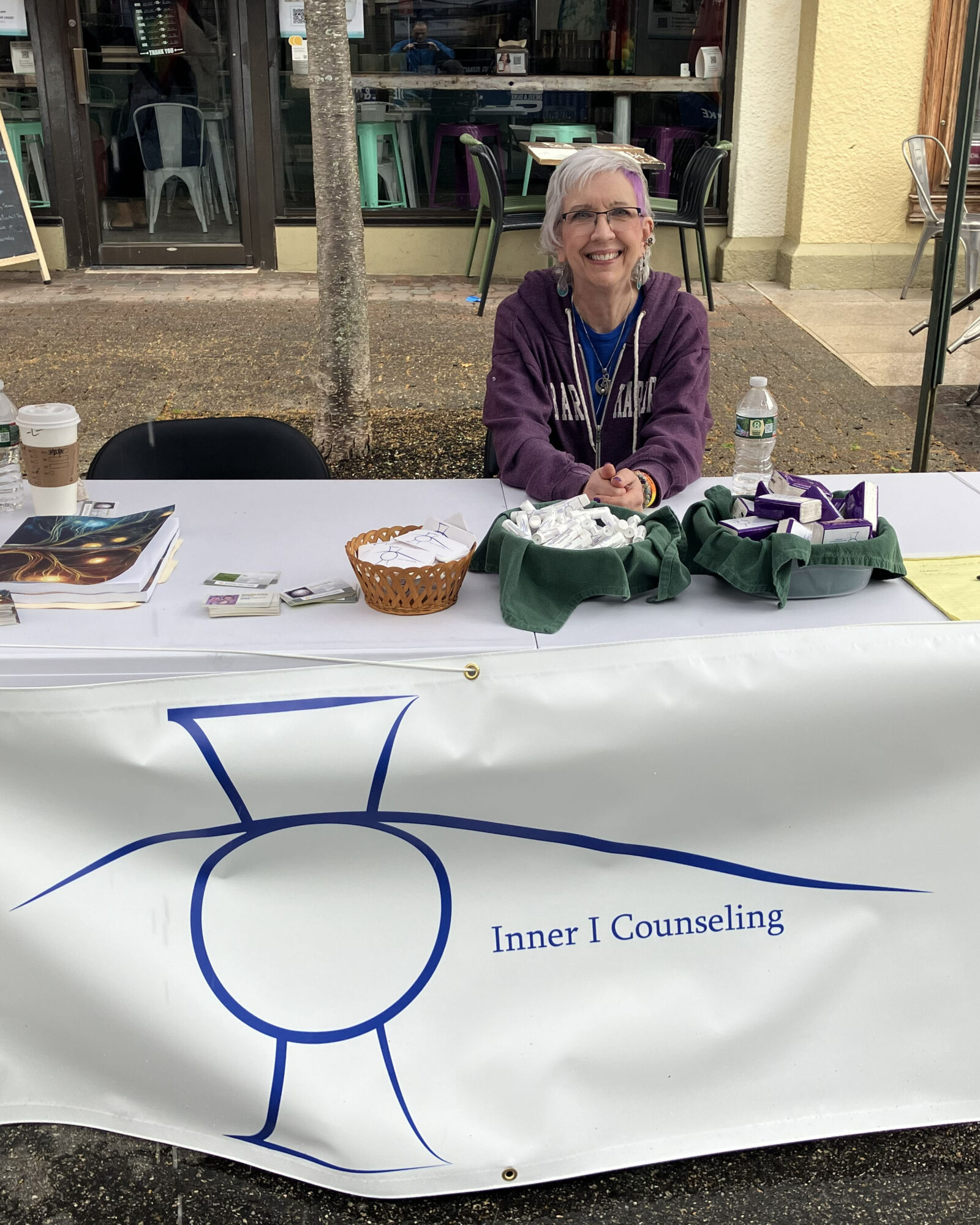
Inner I Counseling is a queer-owned/oriented practice focused on serving the LGBTQ+ community. In addition, I often work with people who practice polyamory/consensual non-monogamy, or who are members of the Pagan and/or Kink communities. From my perspective, counseling is very much about identity and authenticity. People in the queer and Pagan communities, in particular, often have a longer and more complicated path to understanding and accepting themselves, because they don’t conform to traditional societal expectations, and lack the role models for identity development that are readily available to those who are closer to the mainstream of the wider culture.
My counseling approach is focused on helping my clients understand what’s happening in their lives and to make meaning out of their lived experience. I do this work by helping my clients develop their “inner eye” – their ability to reflect on and make sense of what’s happening – so they can use that self-awareness to discover their “inner I” – their most authentic self. We can’t always control the things that happen to us, but if we can connect to a deep sense of self, we have more of a choice in how to respond.
In session, I embody this same philosophy. I don’t create a “counselor persona” – I bring my whole self to the counseling space, including my intelligence, sense of humor and a straightforward communication style. I don’t give advice; instead, I’ll help you explore your thoughts and feelings, and how the goals you set and the choices you make can help you live your truth in the most authentic way possible.
Are there any apps, books, podcasts, blogs or other resources you think our readers should check out?
I’m a big fan of Brene Brown’s books, and she has a podcast as well. Her work is focused on shame, and how our feelings of shame hold us back and keep us from being our best selves. Another author I like is Harriet Learner, because her work is about the “dances” we get stuck in with others, and what happens when we try to change the steps in those dances. Both of them write with humor and openness, often using themselves as examples, which humanizes the struggles we all have.
I’m actually in the process of writing an app of my own, called “Dive into Your Database,” which is about reflecting on the experiences you had growing up, and how those experiences may be playing a part in the challenges you’re facing now. I’m hoping it’ll be available sometime next year!
Pricing:
- I’m in-network with Horizon Blue Cross Blue Shield of New Jersey
- My self-pay rate is $150/session
- If I’m out-of-network, I can offer a limited sliding scale
Contact Info:
- Website: innericounseling.com